How much does cargo insurance cost for truckers?
Motor truck cargo insurance is usually quoted as an annual premium tied to your limit and your commodity, and it is one of the smaller lines on a commercial trucking policy — typically a fraction of what you pay for auto liability.
The thing that moves your quote most is not the limit. It is what you haul. The same $100,000 limit prices completely differently for paper products and for consumer electronics.

We do not publish a premium table on this page. Cargo pricing is genuinely commodity-and-radius specific, and every site that prints a tidy national average is inventing it. What follows is what actually drives the number, so you can tell whether a quote you have been given is reasonable.
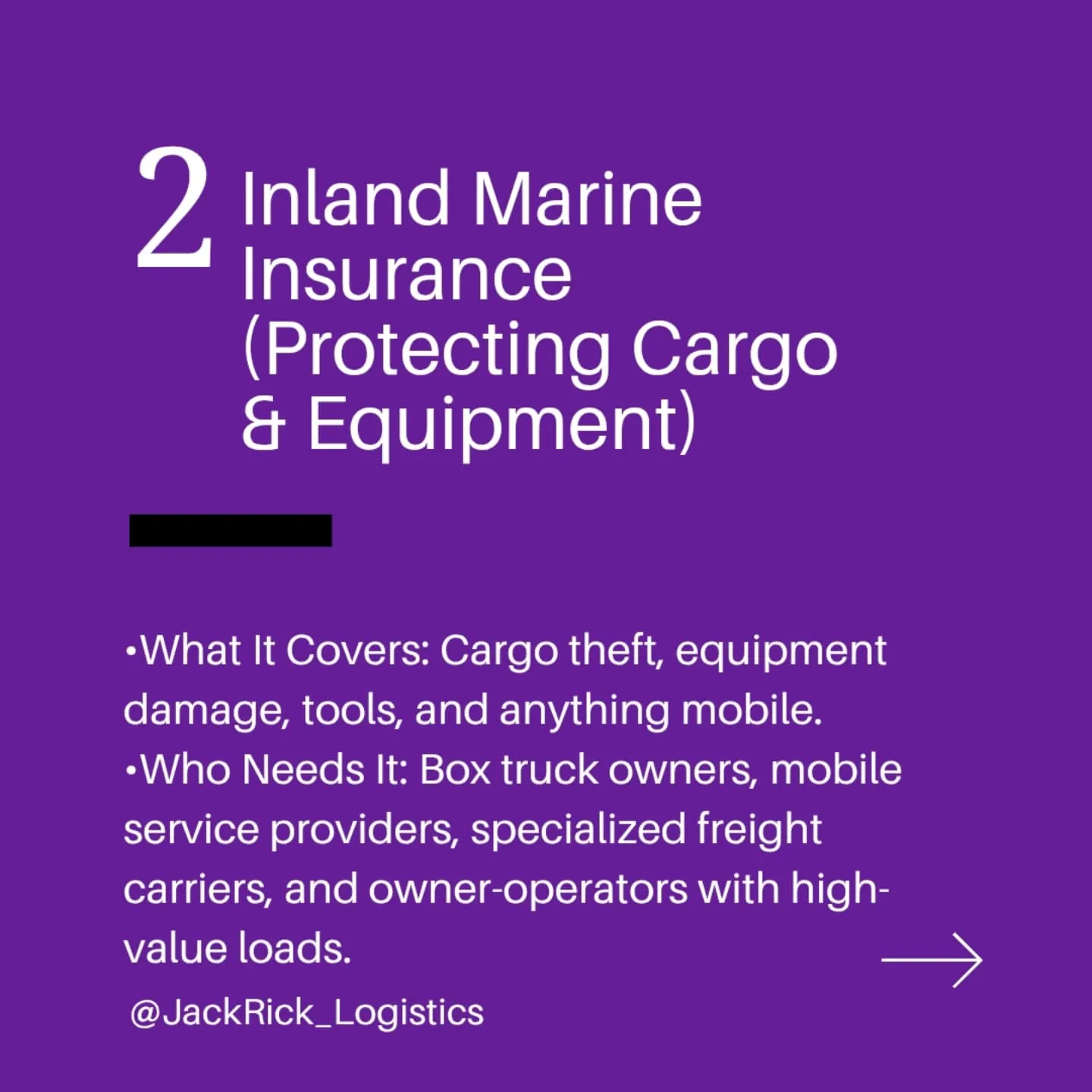

Cargo insurance is not federally required for general freight
There is no federal cargo-insurance minimum and no federal cargo filing requirement for general freight. The federal cargo rules reach household goods carriers only.
Commonly got wrong: THE most misreported figure in the industry. §387.301T(b) is headed "Household goods motor carriers-cargo insurance" and its prohibition reaches only household goods carriers. §387.303T(c) is headed "Household goods motor carriers: Cargo liability". There is no $100,000 anywhere in Part 387 — that number is a broker and shipper CONTRACT norm, not a regulation. Important caveat to publish alongside it: carrier liability for loss or damage to general freight is a separate body of law (the Carmack Amendment, 49 U.S.C. 14706) and is unaffected. No insurance mandate does not mean no liability.
This matters practically, not just pedantically. If you believe cargo insurance is a federal requirement at a fixed limit, you treat it as a box to tick and buy the cheapest thing that satisfies it. Once you understand it is a commercial requirement set by your customers, the questions change: what limit do my brokers actually ask for, what am I hauling, and what happens if this trailer is emptied in a truck stop overnight.
The one exception is household goods, where there genuinely is a federal filing and a federal figure:
Household goods carriers must file cargo security of $5,000 for loss or damage on any one vehicle, and $10,000 for losses occurring at any one time and place.
The eight factors, in the order they matter
- 01 Commodity. The single biggest lever. Theft-targeted freight — electronics, alcohol, tobacco, pharmaceuticals, non-ferrous metals — prices in a different world from building materials and paper.
- 02 Limit. $100,000 is the common broker requirement. $250,000 and above is normal for high-value lanes and is not proportionally more expensive.
- 03 Equipment type. Reefer adds spoilage and temperature-failure exposure. Flatbed adds securement and weather. Dry van is the baseline.
- 04 Radius. Long-haul exposes the load for longer and adds unattended parking. Regional freight prices better.
- 05 Loss history. Prior cargo claims follow you, and a theft claim reads very differently from a damage claim.
- 06 Years in operation. A new authority has no history to price, so it is priced as its class. This improves faster than any other factor.
- 07 Deductible. The lever you control directly. $1,000 to $2,500 is typical; going higher is a legitimate way to buy a higher limit for the same money.
- 08 Security practices. Team drivers, no unattended drops, sealed trailers and tracking all matter to an underwriter, and are rarely volunteered by the applicant.
The exclusions that turn a covered loss into an uncovered one
Cargo policies are narrower than most carriers assume. These are the ones that actually bite:
- Unattended vehicle theft. Many forms exclude or heavily limit theft from a vehicle left unattended, which is exactly the scenario most theft happens in. Check what your policy defines as "attended".
- Refrigeration breakdown. Frequently a separate endorsement, not part of the base form. Some forms also require reefer download data to prove the unit was running at the set point.
- Excluded commodities. Your policy will list them. If you take a load of something on that list, you are uninsured for that load and you will not find out until you claim.
- Employee dishonesty and fictitious pickup. Double-brokering and identity-theft losses often fall outside a standard cargo form.
- Improper securement or loading. If the loss traces to how the freight was secured, coverage gets argued.
Reading the exclusions before you buy is unglamorous and it is the whole job. That is what a broker is for.
Get a real number for your operation
Tell me what you haul, what limit your brokers require, and the radius you actually run, and I will shop it across multiple carriers rather than quoting you one company's answer.

Cargo insurance questions
Is cargo insurance required by law?
For general freight, no. The federal cargo insurance rules in 49 CFR 387 apply to household goods carriers only, at $5,000 / $10,000 (49 CFR 387.303T(c)(1)–(2)). There is no federal cargo minimum for general freight and no federal cargo filing. The $100,000 figure everyone quotes is a broker and shipper contract norm, not a regulation.
So if it is not required, can I skip it?
No, for two reasons. First, you will not get loaded — brokers require it in their carrier agreements and will not tender you freight without a certificate. Second, and more seriously, not being required to insure a risk is not the same as not carrying the risk. Your liability for loss or damage to freight comes from the Carmack Amendment (49 U.S.C. 14706), and that applies whether or not you bought a policy.
What limit do I actually need?
Enough to cover the most valuable load you will ever be under. $100,000 is the common broker requirement and covers most dry van freight. High-value electronics, pharmaceuticals or metals routinely need $250,000 and sometimes more. The right way to choose is to look at what you actually haul, not to pick the cheapest number a broker will accept.
Why did my cargo quote come back so much higher than someone else’s?
Commodity is the biggest driver, and it is not close. Electronics, alcohol, tobacco, pharmaceuticals and non-ferrous metals are targeted for theft and priced accordingly. Reefer adds spoilage and temperature-failure exposure. After commodity, the factors are radius, limit, deductible, loss history and how long you have held authority.
What is not covered?
More than people expect. Common exclusions include unattended vehicle theft, freight left in an unsecured trailer, temperature failure where the reefer was not running or not downloaded, employee dishonesty, and specific excluded commodities listed in your policy. Refrigeration breakdown in particular is often a separate endorsement rather than part of the base cargo form.
Does cargo insurance cover the trailer?
No. Cargo covers the freight. Your own trailer is covered by physical damage. A trailer you pull but do not own needs trailer interchange or non-owned trailer coverage, which is a third thing again.