Commercial truck insurance, from a broker who reads the policy
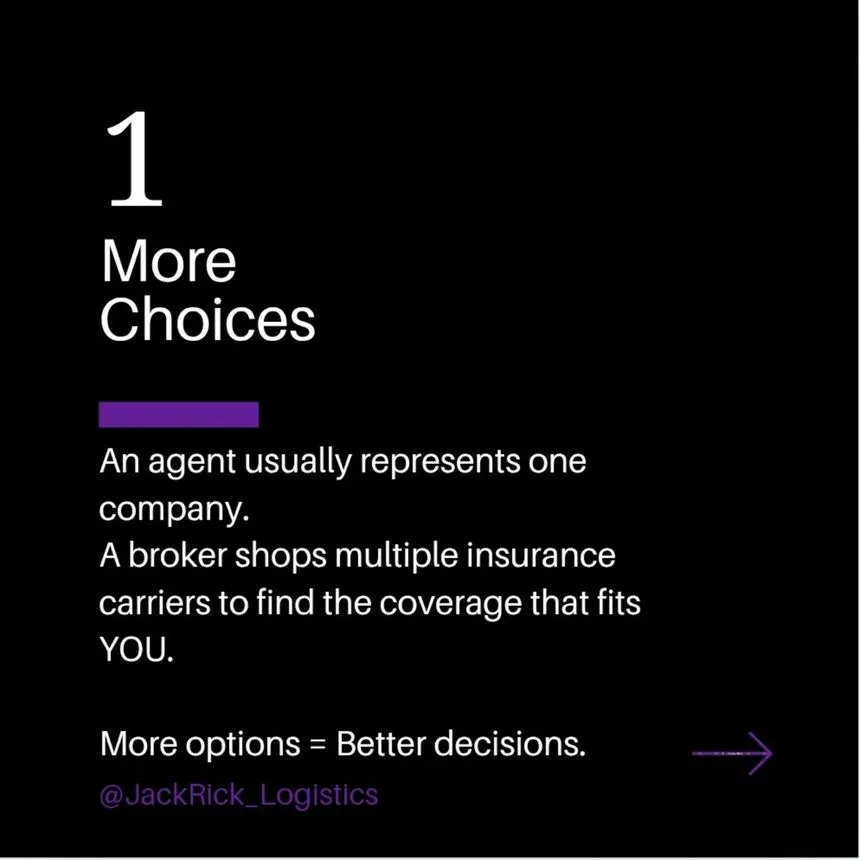
Shay Denise is a licensed independent property and casualty broker, which means shopping multiple insurance carriers rather than quoting the single company a captive agent represents.
She is also your dispatcher. So the person who finds out that a broker rejected your certificate is the person who can fix it.

Don't buy insurance just to activate your authority.
Coverage bought to satisfy a regulation is not coverage sized to a business. The questions that decide what you need are about how you actually operate: what you haul, whose trailer you pull, what radius you really run, and what happens to you if the truck is off the road for six weeks.
What each policy actually does
Every layer above it protects somebody else — the public, the freight, your lender, their trailer. The one that protects you is the only one nobody requires, which is why it is the one most often skipped.
| Coverage | What it covers | Who needs it |
|---|---|---|
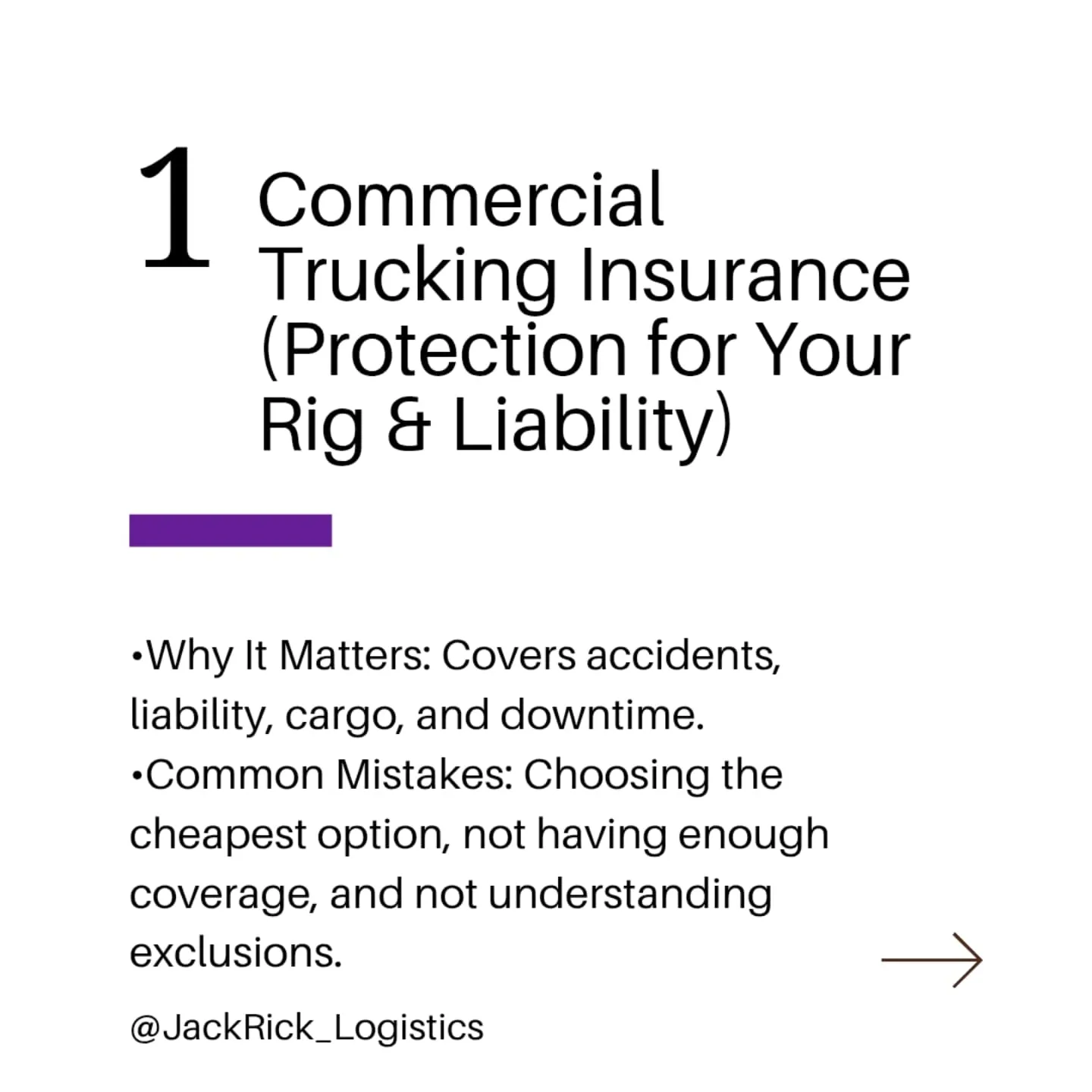
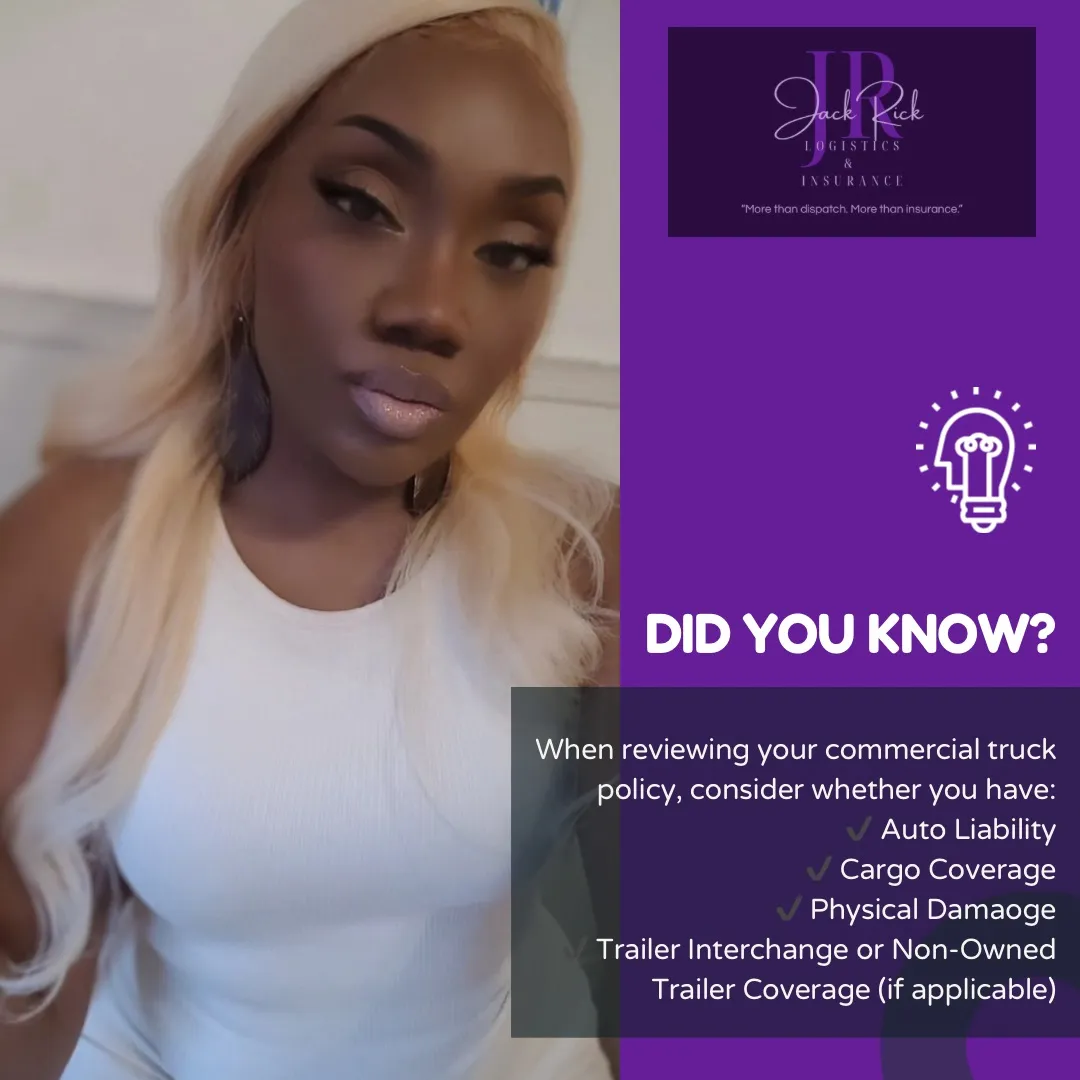
| Auto liability | Injury and property damage you cause to others while operating. Federally, $750,000 for general freight. Most broker contracts ask for more than the federal floor — that is a contract term you negotiate, not a regulation. | Every carrier running under its own authority. Federally required and federally filed. |
| Motor truck cargo | Loss of or damage to the freight you are hauling. The limit is set by your broker contract, not by regulation — and high-value commodities need more than the usual ask. | Effectively every carrier, because brokers require it — though for general freight it is not federally required at all. |
| Physical damage | Damage to your own truck and trailer — collision, fire, theft, weather. Stated value versus actual cash value changes what you actually collect. | Anyone with a note on the equipment, and anyone who could not replace it out of pocket. |
| Trailer interchange / non-owned trailer | Damage to a trailer you pull but do not own. Interchange agreements and UIIA participation usually make this mandatory. | Power-only, intermodal, and anyone pulling a broker or carrier drop trailer. |
| Non-trucking liability | Liability while the truck is in use but not under dispatch. Also called bobtail. Narrower than most drivers assume. | Owner-operators leased on to a carrier. |
| General liability | Injury or damage arising from your business away from the truck itself. Often bundled, often misunderstood as covering the truck. It does not. | Anyone with premises, or whose contracts require it. |
| Occupational accident | Medical and disability cover for an injured owner-operator. Not a substitute for workers comp where comp is legally required. | Owner-operators who are not covered by workers compensation. |
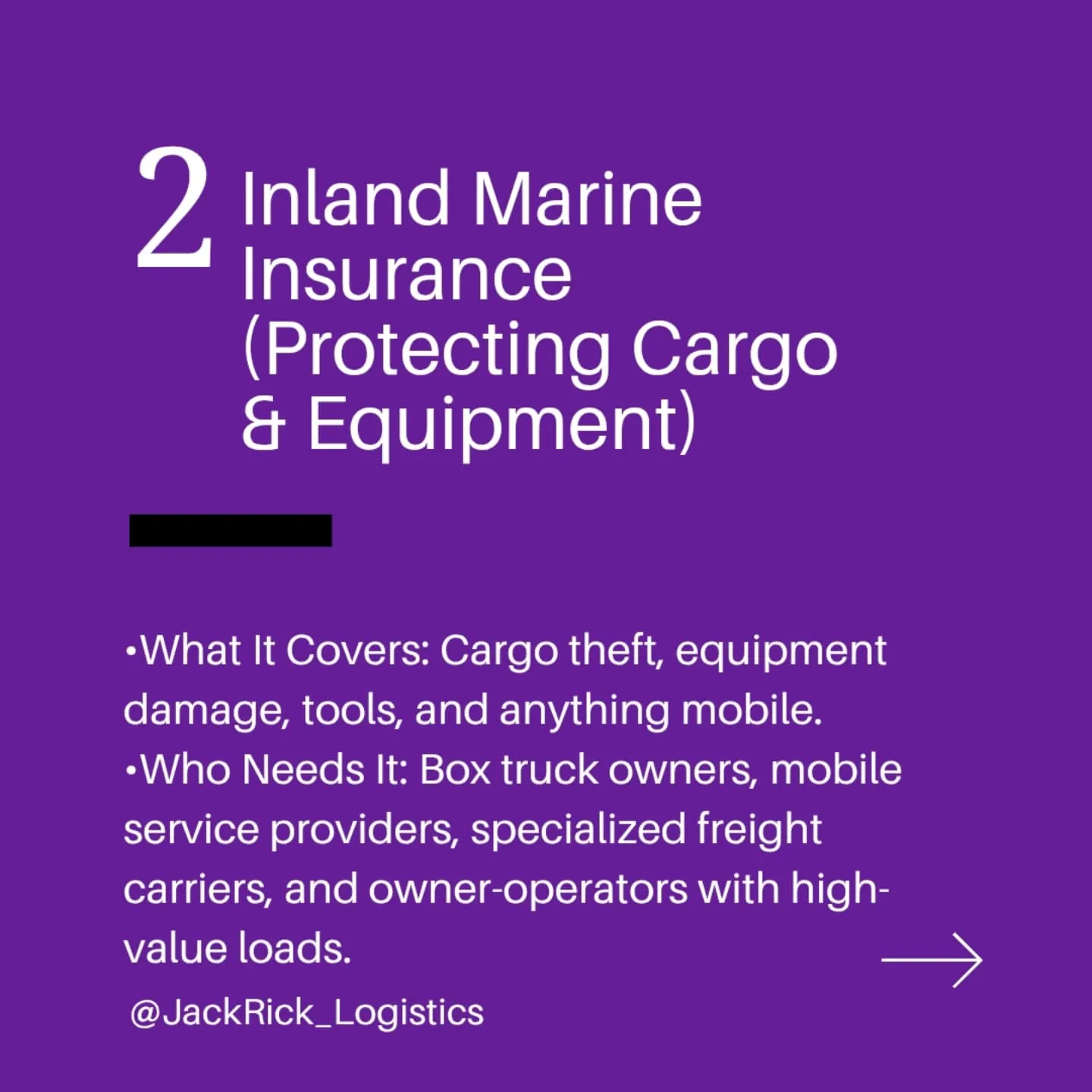
| Inland marine | Tools, tarps, chains, straps, tablets and equipment in transit. Usually cheap, routinely forgotten until something walks off. | Flatbed and specialized operators carrying valuable gear. |
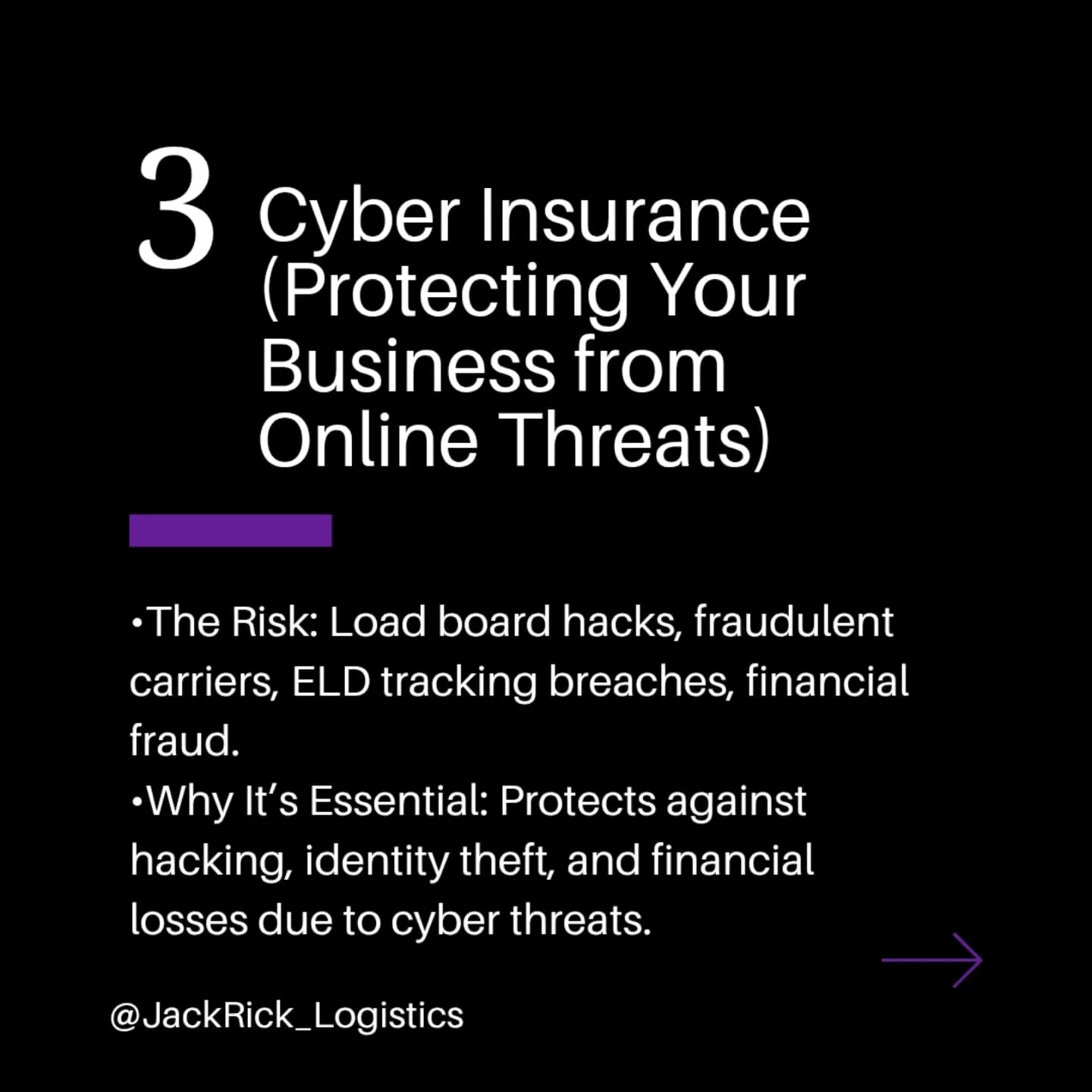
| Cyber liability | Breach response, funds-transfer fraud and business interruption from a technology failure. Newer to trucking, and not something every carrier writes for small fleets. | Any carrier whose ELD, TMS, load board, factoring portal and banking are connected. |
What is federally required, and what only feels like it
The gap between these two categories is where most carriers are either overpaying or dangerously exposed. Every figure below links to the primary regulation.
For-hire carriers hauling non-hazardous property in vehicles with a GVWR of 10,001 lb or more must carry at least $750,000 in public liability coverage.
Commonly got wrong: Part 387 was last amended 91 FR 45660, 21 Jul 2026 — the $750,000 figure survived that amendment.
There is no federal cargo-insurance minimum and no federal cargo filing requirement for general freight. The federal cargo rules reach household goods carriers only.
Commonly got wrong: THE most misreported figure in the industry. §387.301T(b) is headed "Household goods motor carriers-cargo insurance" and its prohibition reaches only household goods carriers. §387.303T(c) is headed "Household goods motor carriers: Cargo liability". There is no $100,000 anywhere in Part 387 — that number is a broker and shipper CONTRACT norm, not a regulation. Important caveat to publish alongside it: carrier liability for loss or damage to general freight is a separate body of law (the Carmack Amendment, 49 U.S.C. 14706) and is unaffected. No insurance mandate does not mean no liability.
The Part 387 subpart A minimums do not apply at all to a vehicle with a GVWR under 10,001 lb, unless it carries listed explosives, poisons or radioactives.
Commonly got wrong: MYTH: "$750,000 is the minimum for every trucking company." It is not. It applies to FOR-HIRE, NON-HAZARDOUS, 10,001 lb and over. The $300,000 figure people quote for small vehicles comes from a different subpart — 49 CFR 387.303T(b)(1)(i).
No motor carrier may operate a vehicle until it has obtained and has in effect the minimum levels of financial responsibility.
Commonly got wrong: Violating §387.7(a) is an automatic failure of the new-entrant safety audit on a single occurrence — 49 CFR 385.321(b), table item 9.
Do not let it auto-renew
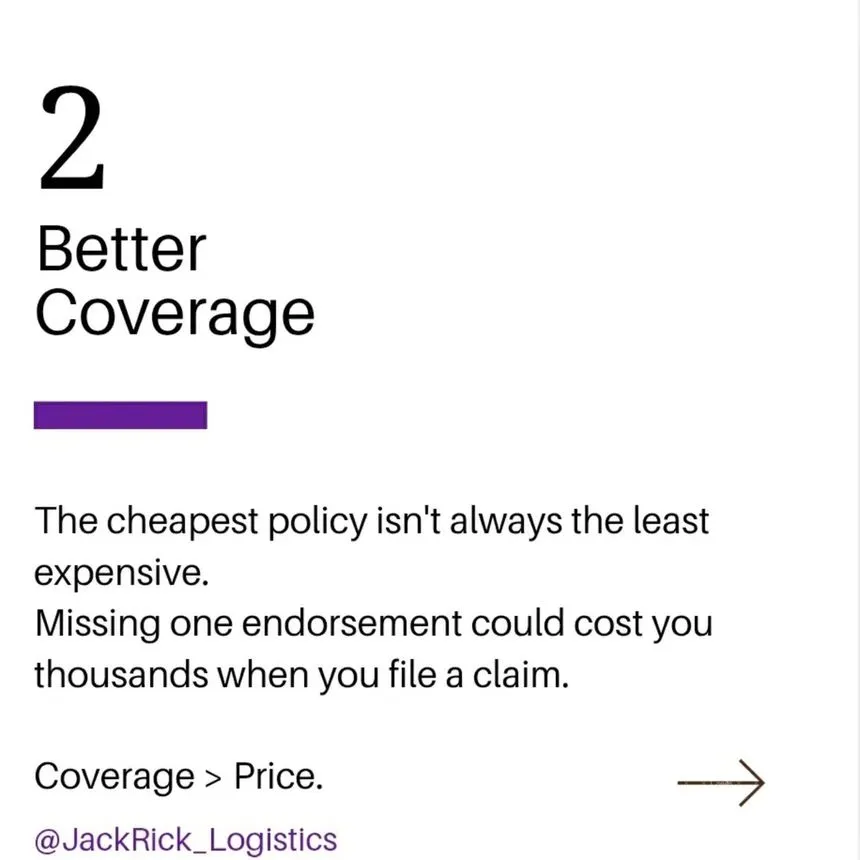
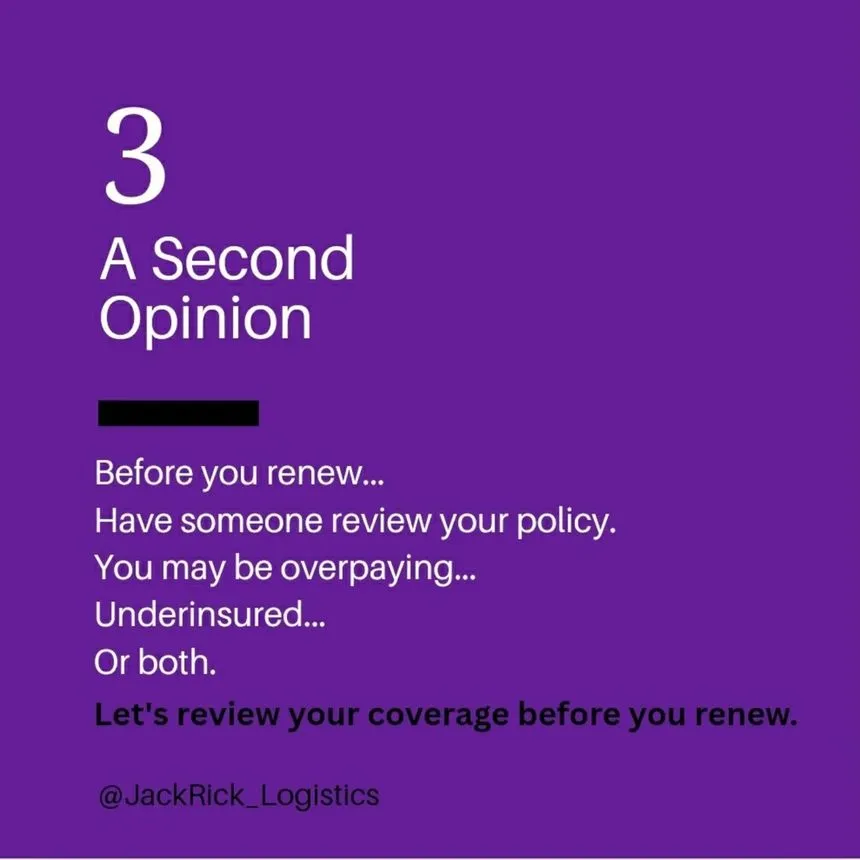
Has anyone actually reviewed my policy, or am I JUST letting it renew?
Three questions before every renewal:
- Am I paying for coverage I do not need?
- Am I missing coverage I do need?
- Has anyone actually read this policy, or is it just rolling over?
The first renewal after a new authority is the highest-value one to shop, because a clean twelve months moves you into a different pricing class and nothing about an automatic renewal captures that.
Get it looked at properly
Send over what you have, or tell me what you are about to buy. Either way you get a real read on it — including the parts where the honest answer is that your current policy is fine.
Insurance is offered through Shay Denise, a licensed property and casualty producer . Coverage is subject to the terms, conditions and exclusions of the policy actually issued. Nothing on this page is a binder, a quote, or an offer of coverage.


A black Peterbilt tractor pulling out under lights, filmed from the side.
Your dispatcher finds out first
A rejected certificate, a lane that needs trailer interchange you do not carry, a limit that is about to cost you a customer — every one of those surfaces in dispatch, not at renewal. Being both means it gets fixed the same day instead of next quarter.
Insurance questions
What is the difference between an insurance broker and an agent?
A captive agent represents one insurance company and can only offer you what that company sells. An independent broker shops multiple carriers and places you with whichever one fits your operation. When you are hard to place — a new authority, a claim on record, an unusual commodity — that difference decides whether you get quoted at all.
Which coverages do I actually need?
Auto liability if you run under your own authority — that one is federal. Cargo, because brokers require it. Physical damage if you could not replace the truck out of pocket. After that it depends entirely on how you operate: pull someone else’s trailer and you need interchange; leased on and you need non-trucking liability instead of primary. There is no universal package, and anyone selling you one has not asked enough questions.
Is cargo insurance legally required?
For general freight, no. The federal cargo rules apply to household goods carriers only. You still need it because your customers require it contractually — but understanding it as a commercial requirement rather than a regulatory one changes how you choose the limit.
How do I verify that you are actually licensed?
Look up any insurance producer in the NIPR Producer Database at pdb.nipr.com. Insurance producers are licensed by individual state Departments of Insurance — there is no federal insurance license. You can also check any insurance company’s license status, financial health and complaint history through the NAIC Consumer Insurance Search.
Can you review a policy I already have?
Yes, and that is often the most useful first conversation. Most carriers have never had anyone read their policy against how they actually operate — which coverage they are paying for and do not need, and which gap is going to matter.