Truck insurance for a new authority
To activate a new MC number you need public liability filed with FMCSA — $750,000 for general freight over 10,001 lb GVWR. To actually get loaded, you need what brokers require, which is usually $1,000,000 liability and around $100,000 cargo.
Those are two different numbers, and buying to the first one is the most common and most expensive mistake a new carrier makes.

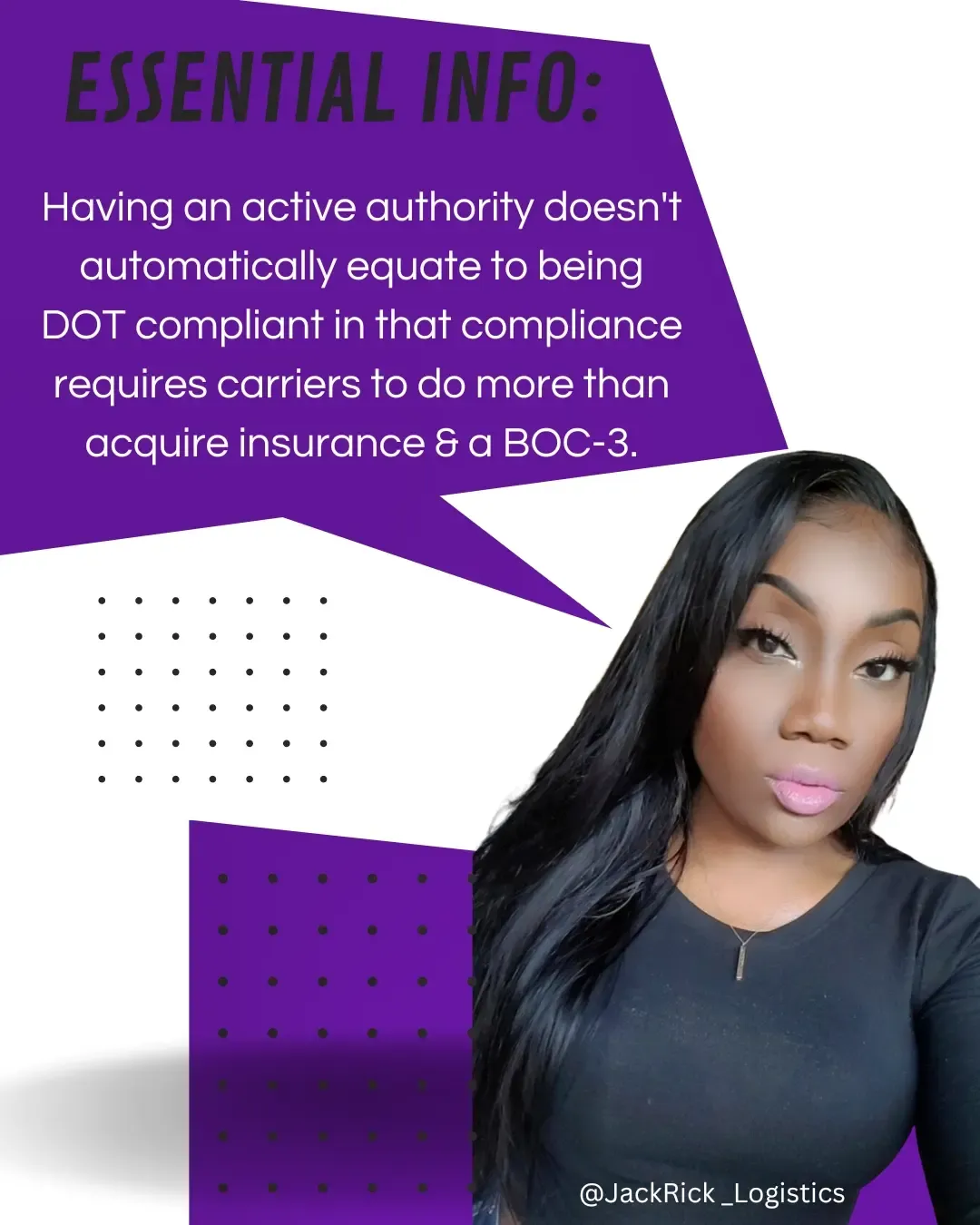
Don't buy insurance just to activate your authority.
The full quote is worth reading, because it names the actual failure: new owner-operators buy "based on the minimum required to get their authority active, buuuut not based on how they actually plan to operate." A policy sized to a regulation is not a policy sized to your business.
Start here, before anyone sells you anything
Three questions decide what you actually need. Not your budget, and not what the last agent quoted you.
- What do you haul, and for whom? Non-hazardous general freight for brokers is one risk. Bulk hazmat is a completely different regulatory tier. Reefer carries claims exposure that dry van does not.
- Do you own your trailer? If you pull someone else's — interchange agreements, intermodal chassis, a broker's drop trailer — you need coverage for equipment you do not own, and it is not in a standard package.
- What radius do you actually run? Underwriters price radius heavily. A carrier who says "nationwide" because it sounds better and then runs 200-mile regional freight is paying for miles they never drive.
When the answer is no: if you are leased on to a carrier and running under their authority, you do not need primary liability. You need non-trucking liability and probably physical damage, which is a much smaller bill. Anyone selling a leased-on driver a full primary liability policy is selling them something they cannot use.
What federal law actually requires
For-hire carriers hauling non-hazardous property in vehicles with a GVWR of 10,001 lb or more must carry at least $750,000 in public liability coverage.
Commonly got wrong: Part 387 was last amended 91 FR 45660, 21 Jul 2026 — the $750,000 figure survived that amendment.
The Part 387 subpart A minimums do not apply at all to a vehicle with a GVWR under 10,001 lb, unless it carries listed explosives, poisons or radioactives.
Commonly got wrong: MYTH: "$750,000 is the minimum for every trucking company." It is not. It applies to FOR-HIRE, NON-HAZARDOUS, 10,001 lb and over. The $300,000 figure people quote for small vehicles comes from a different subpart — 49 CFR 387.303T(b)(1)(i).
Carriers hauling bulk hazardous substances, bulk Division 1.1/1.2/1.3 explosives, bulk Division 2.3 Hazard Zone A, or highway route controlled quantities of Class 7 radioactives must carry $5,000,000.
Carriers hauling oil listed in 49 CFR 172.101, or hazardous waste, materials or substances not captured by the $5,000,000 tier, must carry $1,000,000.
There is no federal cargo-insurance minimum and no federal cargo filing requirement for general freight. The federal cargo rules reach household goods carriers only.
Commonly got wrong: THE most misreported figure in the industry. §387.301T(b) is headed "Household goods motor carriers-cargo insurance" and its prohibition reaches only household goods carriers. §387.303T(c) is headed "Household goods motor carriers: Cargo liability". There is no $100,000 anywhere in Part 387 — that number is a broker and shipper CONTRACT norm, not a regulation. Important caveat to publish alongside it: carrier liability for loss or damage to general freight is a separate body of law (the Carmack Amendment, 49 U.S.C. 14706) and is unaffected. No insurance mandate does not mean no liability.
Which form is which
Four document names get used interchangeably by people who should know better. They are not interchangeable, and confusing them is how carriers end up believing they are covered when their authority has gone inactive.
| Form | What it actually is | Where it lives |
|---|---|---|
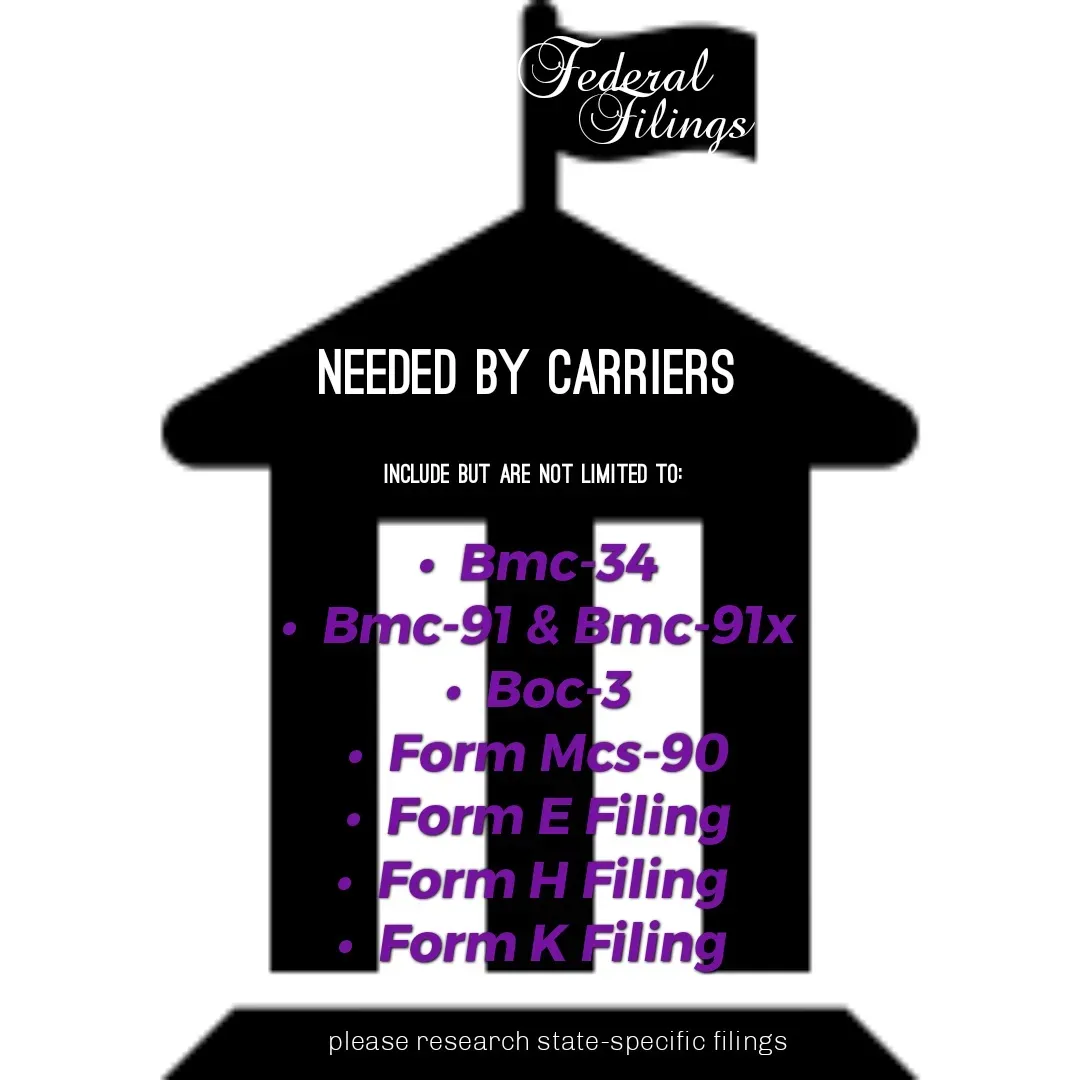
| MCS-90 | An endorsement on your liability policy. Obliges the insurer to pay a judgment even where the policy would otherwise exclude it. | Kept at your principal place of business |
| MCS-82 | The surety bond equivalent of the MCS-90. | Kept at your principal place of business |
| BMC-91 / 91X | The certificate of insurance your insurer files with FMCSA. This is what activates and maintains your authority. 91X allows layered coverage across insurers. | Filed electronically with FMCSA |
| BMC-34 / 83 | Cargo certificate and surety bond. Household goods carriers only — there is no general-freight equivalent. | Filed with FMCSA |
| BMC-35 / 36 | Notice of cancellation, giving FMCSA 30 days notice. | Filed by the insurer |
The MCS-90 is an endorsement attached to your policy and kept at your principal place of business. The document filed with FMCSA is the BMC-91 or BMC-91X certificate.
Commonly got wrong: MYTH: "the MCS-90 is your insurance policy" and "you file the MCS-90 with FMCSA". Two different documents, two different places. The MCS-90 obliges the insurer to pay a judgment even where the policy would otherwise exclude it.
A liability policy may be canceled only on 35 days written notice from the insurer or the insured carrier to the other.
Why year one costs what it costs
Underwriting a new authority is an exercise in pricing the unknown. There is no loss run, no CSA score, and no safety history — so you are priced as the class you belong to rather than as the operator you are. These are the levers that actually move the number:
- Driving experience — verifiable CDL years, not years since licensing
- MVR — violations and accidents in the last three to five years
- Radius of operation — priced heavily; do not overstate it
- Commodity — what you haul changes both the tier and the appetite
- Equipment age and value — drives the physical damage side
- Garaging location — where the truck sits overnight, not where you incorporated
- Credit and payment history — used by many carriers in this class
- Limits and deductibles — the part you actually control
The single biggest reduction available to a new authority is time. A clean twelve months changes the class you are priced in. That is why the first renewal is the one to shop hardest, and why letting it auto-renew is the quiet money leak.
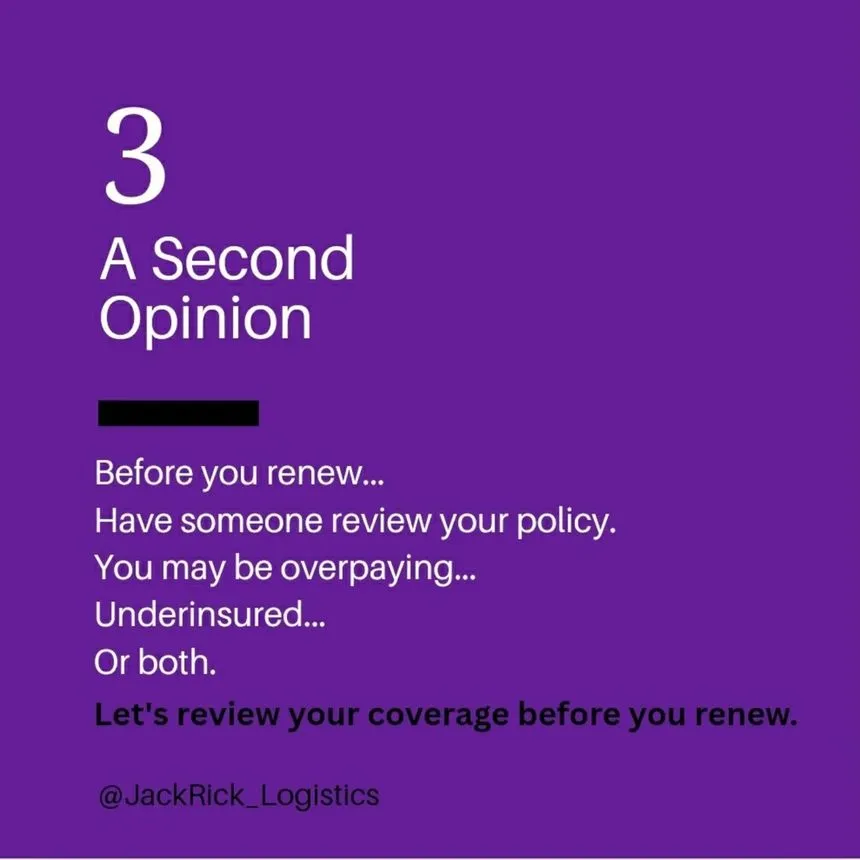
Has anyone actually reviewed my policy, or am I JUST letting it renew?
A broker, not an agent
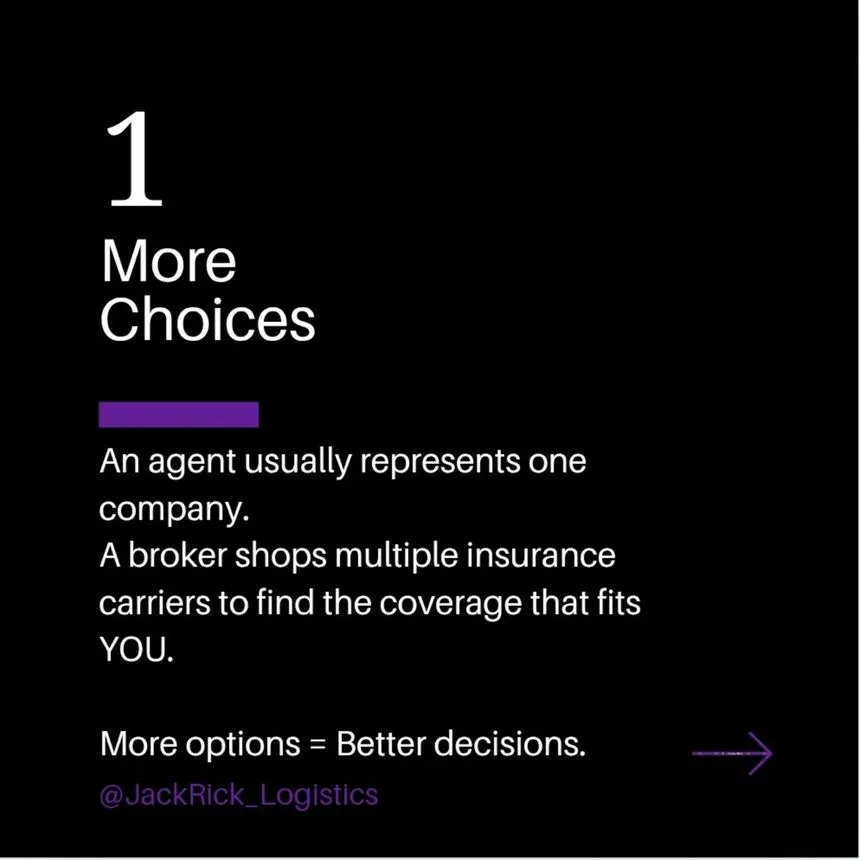
A captive agent represents one insurance company and quotes you what that company offers. An independent broker shops multiple carriers and places you where you fit. When you are a new authority — the hardest class to place — that difference is not marketing, it is whether you get quoted at all.
Shay Denise is a licensed property and casualty producer. You can verify any insurance producer, including her, in the NIPR Producer Database . Insurance producers are licensed by individual state Departments of Insurance; there is no federal insurance license.
The other half of it: dispatch and insurance are handled by the same person here. When a broker rejects your certificate at 6am, the person who finds out is the person who can fix it.

New authority insurance questions
What insurance do I need to activate my MC number?
Public liability, filed with FMCSA by your insurer. For a for-hire carrier hauling non-hazardous property in a vehicle of 10,001 lb GVWR or more, the federal minimum is $750,000 (49 CFR 387.9, Table 1, row (1)). The filing is what activates the authority — the certificate your insurer files, not the policy document you hold.
Is $750,000 enough?
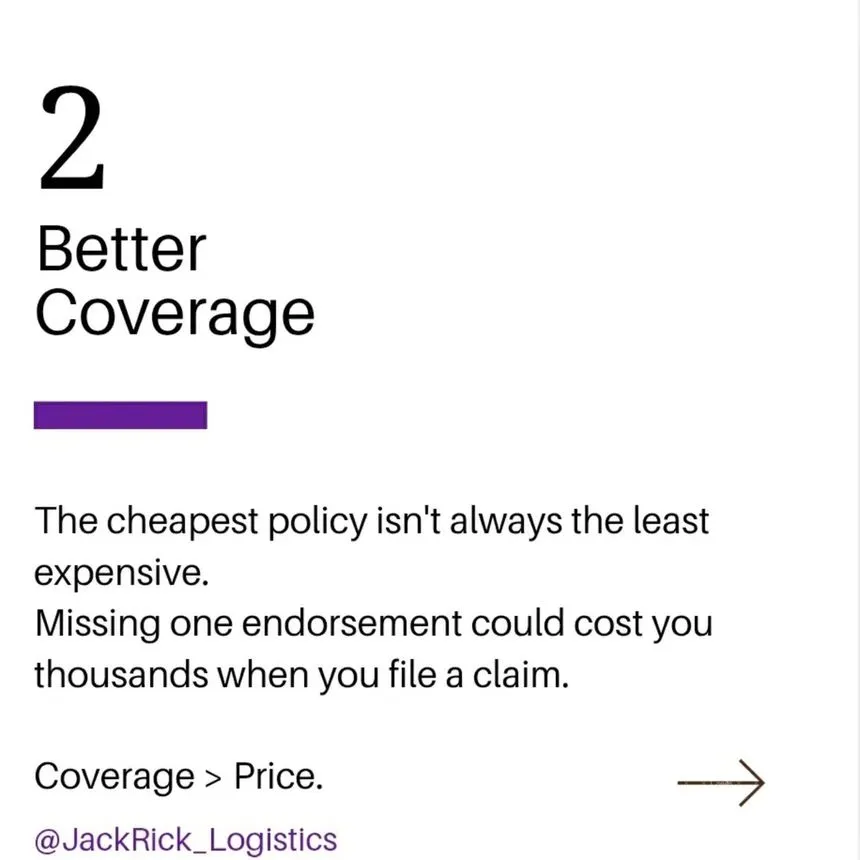
It is enough for FMCSA. It is not enough for most brokers, who commonly require $1,000,000 in auto liability before they will put you on a load. Buying to the federal minimum and then discovering you cannot get booked is a very expensive way to save a few hundred dollars a month.
Do I need cargo insurance?
Federal law does not require it for general freight — the federal cargo rules reach household goods carriers only. You will still need it, because brokers and shippers require it contractually, usually around $100,000. The distinction matters because it means the limit is a commercial decision driven by what you haul, not a box to tick.
Why is my first-year premium so high?
Underwriters price on statistics, and a brand new authority has none. No safety history, no loss run, no CSA score, often a driver with limited verifiable experience. You are priced as the class you belong to rather than as yourself. That reverses as you build a clean record, which is why the first renewal is the one worth shopping hardest.
What is an MCS-90, and do I file it?
No — you keep it. The MCS-90 is an endorsement attached to your liability policy and held at your principal place of business (49 CFR 387.7(d)). It obliges your insurer to pay a judgment even where the policy would otherwise exclude it. The document filed with FMCSA is a different thing entirely: the BMC-91 or BMC-91X certificate.
Can I cancel and switch mid-policy?
You can, but understand the mechanics. A liability policy can only be canceled on 35 days written notice (49 CFR 387.7(b)(1)), and your authority goes inactive the moment there is no filing on record. Sequence the new filing before the old cancellation, never the other way round.
Do you write the policy yourself?
No — a broker does not underwrite. Shay Denise is an independent licensed property and casualty producer, which means shopping multiple carriers and placing you with whichever one fits, rather than quoting the single company a captive agent represents.