How to get your own trucking authority
Getting your own authority is a sequence of filings, not a single form: USDOT number, operating authority (MC), liability on file with FMCSA, and a BOC-3 process agent.
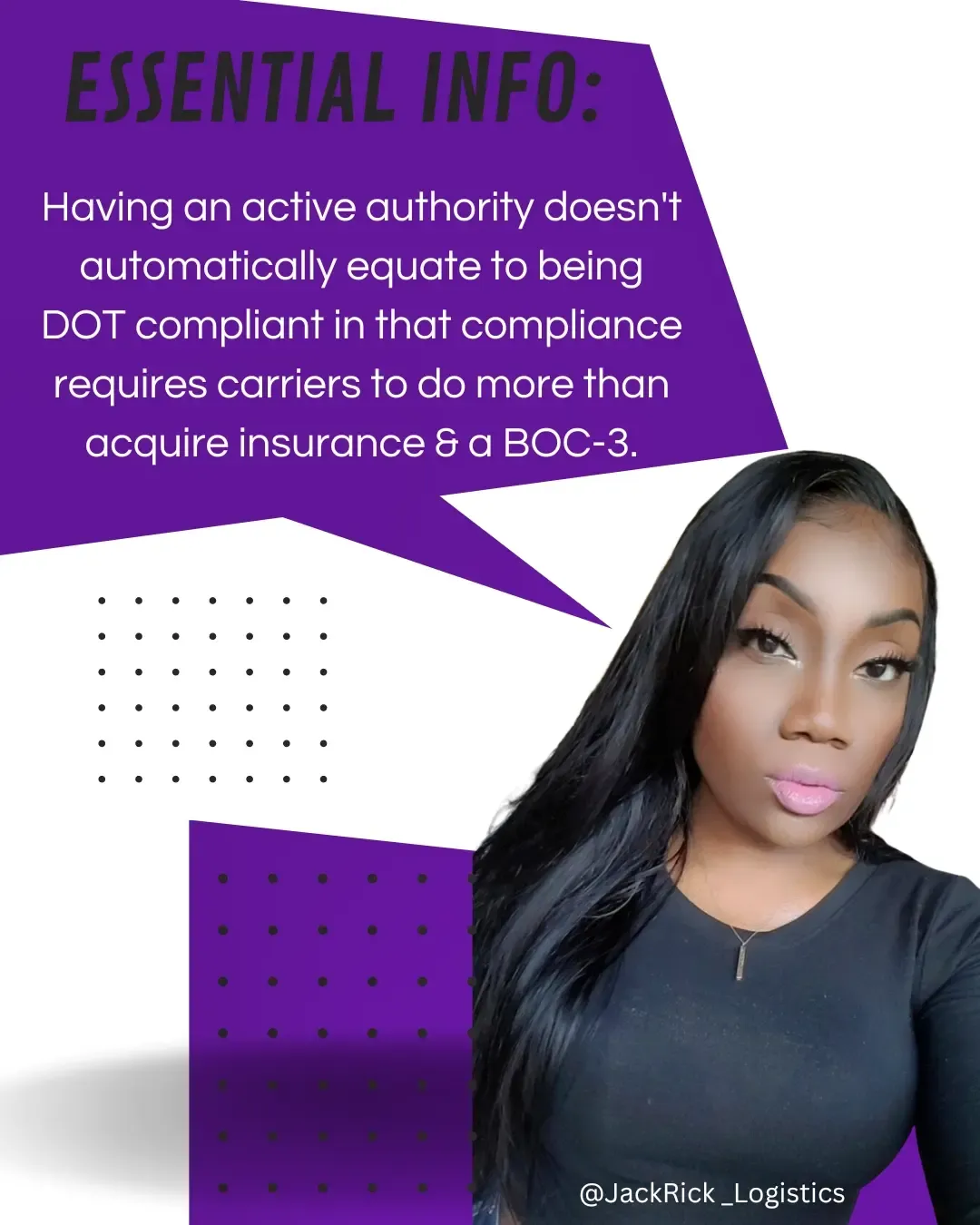
When those clear, you are active. You are not yet compliant — and that gap is where first-year carriers get hurt.

Regulatory figures on this page were verified against primary sources on August 16, 2026. Citations link to eCFR text.
Six steps that actually get you authority
-
Decide what you are applying as
For-hire property carrier, private carrier, household goods, passenger, or hazmat — the application path and the insurance floor change with the answer. Most owner-operators reading this are for-hire property in a vehicle over 10,001 lb GVWR.
-
Get a USDOT number
Register in the FMCSA system and receive a USDOT number. A new entrant’s USDOT starts inactive. You may not begin interstate operations, or mark a vehicle with the number, until FMCSA gives written notice that it is activated.
-
Apply for operating authority (MC number)
Operating authority is what lets a for-hire carrier move freight for compensation across state lines. The MC (or docket) number is the authority identifier. It is not the same thing as the USDOT number — see the MC vs DOT explainer linked below.
-
Put liability insurance on file with FMCSA
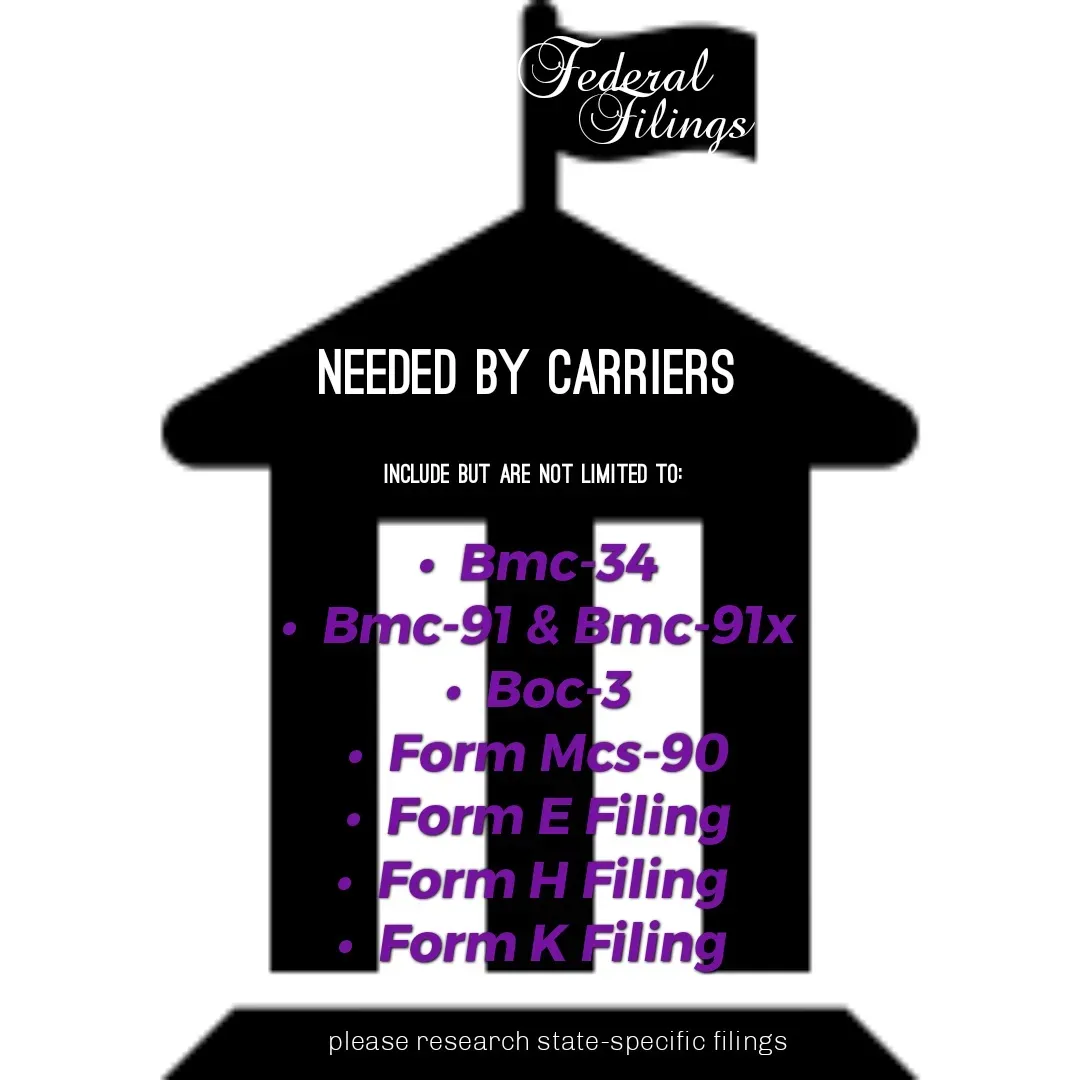
Your insurer files proof of public liability (BMC-91 or BMC-91X). For general freight over 10,001 lb GVWR the federal floor is $750,000. Brokers commonly require more. The filing is what FMCSA looks at — not the paper certificate in your cab.
-
Designate a process agent (BOC-3)
Every for-hire carrier must have a process agent on file in each state where they can be sued. The BOC-3 is that designation. Without it, the authority does not activate. This is a filing you buy from a process-agent service — it is not something a dispatcher or insurance broker is by itself.
-
Wait for the authority to go active — then keep going
Active means FMCSA will let you run. It does not mean you are audit-ready. UCR, IRP, IFTA (if you qualify), a DQ file, a drug-and-alcohol program, and a compliant ELD are separate work. That gap is why the checklist page exists alongside this one.
For the full compliance stack after activation — UCR, IRP, DQ file, consortium, ELD — use the new authority checklist. This page stops where “active” begins on purpose.
USDOT vs MC — do not conflate them
A USDOT number identifies the carrier. An MC number is operating authority for for-hire interstate work. You can hold one without being allowed to do what you think the other permits. Read that page before you pay anyone to “get you a number.”
What has to be on file
For-hire carriers hauling non-hazardous property in vehicles with a GVWR of 10,001 lb or more must carry at least $750,000 in public liability coverage.
Commonly got wrong: Part 387 was last amended 91 FR 45660, 21 Jul 2026 — the $750,000 figure survived that amendment.
The Part 387 subpart A minimums do not apply at all to a vehicle with a GVWR under 10,001 lb, unless it carries listed explosives, poisons or radioactives.
Commonly got wrong: MYTH: "$750,000 is the minimum for every trucking company." It is not. It applies to FOR-HIRE, NON-HAZARDOUS, 10,001 lb and over. The $300,000 figure people quote for small vehicles comes from a different subpart — 49 CFR 387.303T(b)(1)(i).
No motor carrier may operate a vehicle until it has obtained and has in effect the minimum levels of financial responsibility.
Commonly got wrong: Violating §387.7(a) is an automatic failure of the new-entrant safety audit on a single occurrence — 49 CFR 385.321(b), table item 9.
Buying only to the federal floor is how new authorities activate and then cannot get broker packets approved. Walk through insurance for a new authority before you bind.
Most carriers don't fail from lack of loads
JackRick Logistics works both sides of the first year: the filings that activate, and the dispatch that books you once brokers will take the certificate.
Get the sequence right before you spend
Tell me where you are — no application yet, waiting on a filing, or already active with an empty compliance folder — and you get a straight next step.
Authority questions
How long does it take to get trucking authority?
The application itself can move in days once the forms are clean. The clock that actually matters is insurance and BOC-3 clearing so the authority activates, then the weeks it takes to stand up compliance before you should take the first load. Anyone selling “authority in 24 hours” is selling a filing, not a ready business.
Do I need both a USDOT number and an MC number?
If you are a for-hire interstate carrier, yes — they do different jobs. USDOT identifies the carrier and the vehicles. The MC number is operating authority. Confusing them is how people think they are authorized when they are only registered.
What insurance do I need to activate authority?
Public liability filed with FMCSA. For general freight over 10,001 lb GVWR that floor is $750,000 (49 CFR 387.9, Table 1, row (1)). Cargo is usually required by brokers, not by federal law for general freight. Size the policy to how you will operate, not only to the activation minimum.
Can I haul as soon as my USDOT number arrives?
No. A new entrant receives an inactive USDOT number and may not begin operations until FMCSA activates it in writing (49 CFR 385.305(c)).
What is the difference between this page and the new-authority checklist?
This page is the process of getting authority. The checklist is everything required to be compliant once you are active. Google treats those as different questions — and carriers who only finish the process half get shut down on the audit half.
Should I lease on instead of getting my own authority?
Sometimes. Leasing on means you run under someone else’s authority and usually need non-trucking liability and physical damage rather than a full primary package. Own authority means you control the MC — and you own every filing and audit exposure that comes with it. The wrong choice is expensive either direction.