Owner-operator truck insurance
There are two completely different owner-operator packages, and which one you need is decided by a single question: are you running under your own authority, or leased on to a motor carrier?
Getting that wrong is the most consequential mis-sale in this market, and it usually surfaces after an accident rather than before.

Two packages, one question
| Coverage | Own authority | Leased on |
|---|---|---|
| Primary auto liability | You carry it, and it is filed with FMCSA | The motor carrier provides it |
| Non-trucking liability | Not applicable | Yes — covers you off dispatch |
| Motor truck cargo | Yours — brokers require it | Usually the carrier's |
| Physical damage | Yours | Yours |
| Occupational accident | Yours | Yours, sometimes offered through the carrier |
| Trailer interchange | If you pull trailers you do not own | Usually the carrier's trailer, so rarely |
If someone is selling a leased-on driver a full primary liability policy, they are selling them something they cannot use. If someone is selling an authority holder non-trucking liability as their main coverage, that is worse.
What is required, and what only feels required
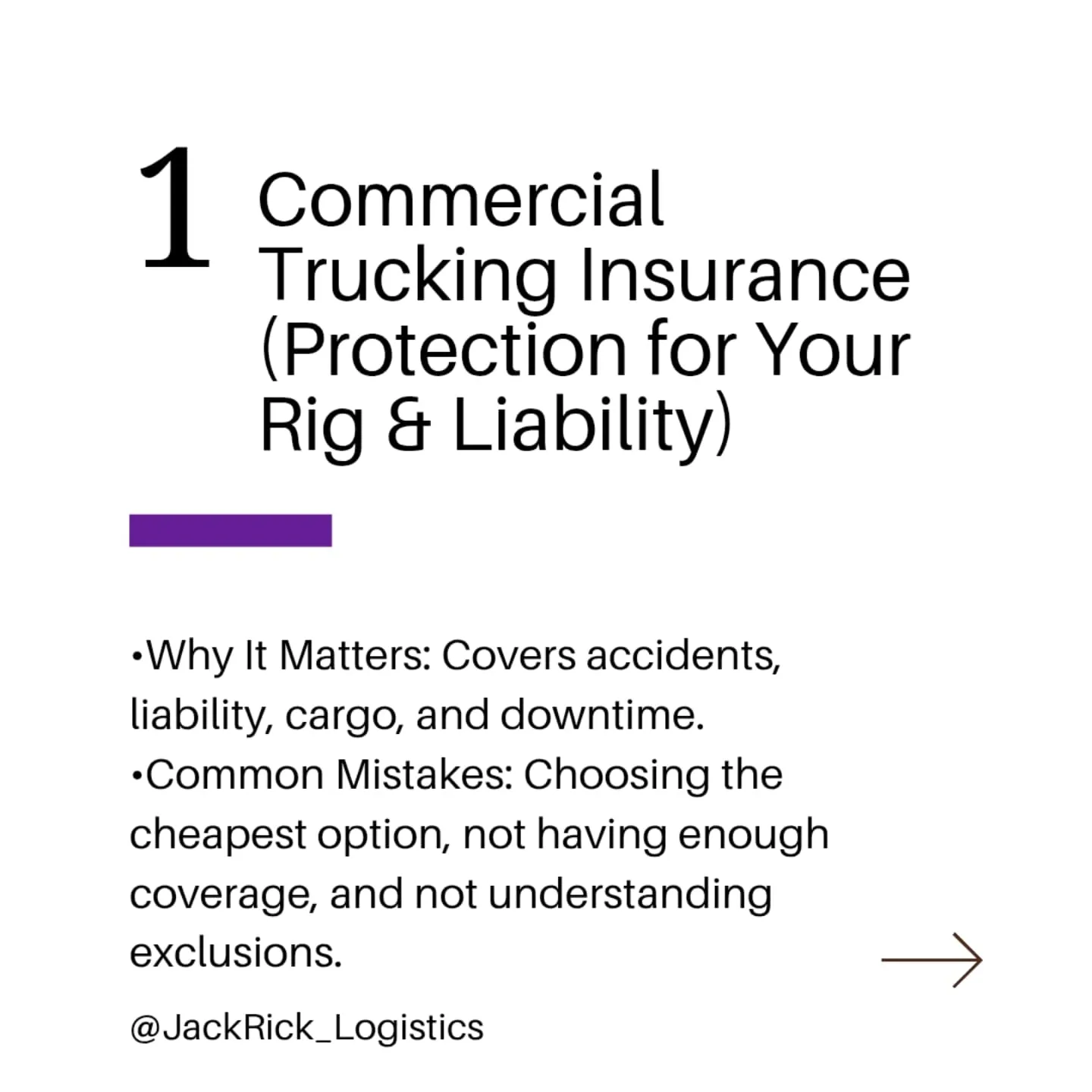
For-hire carriers hauling non-hazardous property in vehicles with a GVWR of 10,001 lb or more must carry at least $750,000 in public liability coverage.
Commonly got wrong: Part 387 was last amended 91 FR 45660, 21 Jul 2026 — the $750,000 figure survived that amendment.
There is no federal cargo-insurance minimum and no federal cargo filing requirement for general freight. The federal cargo rules reach household goods carriers only.
Commonly got wrong: THE most misreported figure in the industry. §387.301T(b) is headed "Household goods motor carriers-cargo insurance" and its prohibition reaches only household goods carriers. §387.303T(c) is headed "Household goods motor carriers: Cargo liability". There is no $100,000 anywhere in Part 387 — that number is a broker and shipper CONTRACT norm, not a regulation. Important caveat to publish alongside it: carrier liability for loss or damage to general freight is a separate body of law (the Carmack Amendment, 49 U.S.C. 14706) and is unaffected. No insurance mandate does not mean no liability.
No motor carrier may operate a vehicle until it has obtained and has in effect the minimum levels of financial responsibility.
Commonly got wrong: Violating §387.7(a) is an automatic failure of the new-entrant safety audit on a single occurrence — 49 CFR 385.321(b), table item 9.
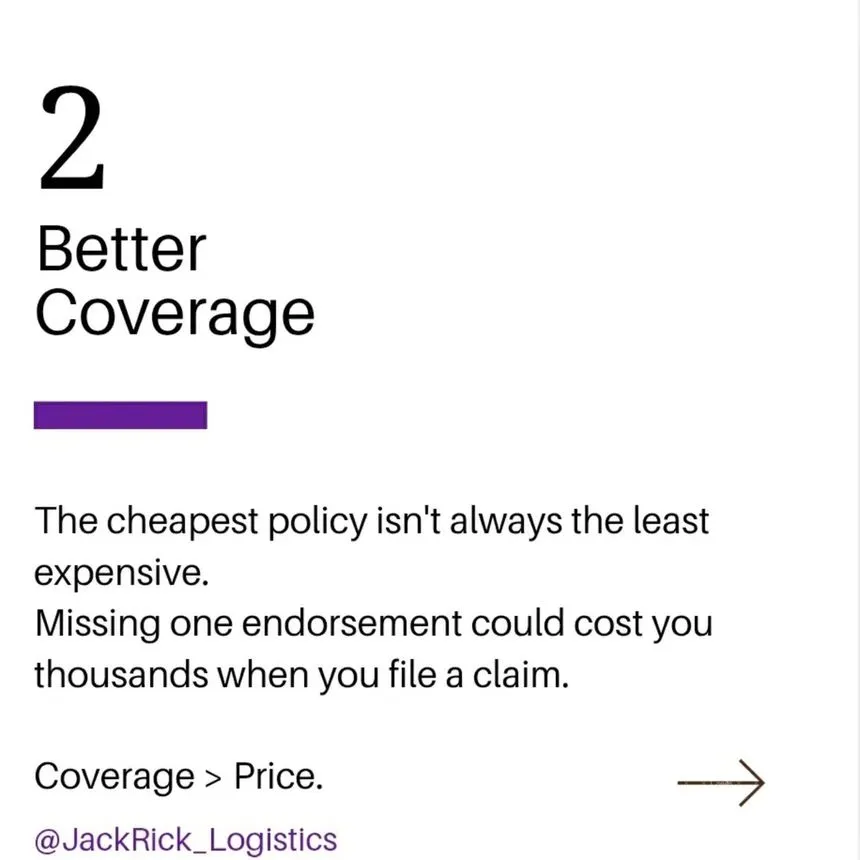
The gap between the federal floor and what brokers actually demand is where new authorities lose money. Federal minimum activates the authority. Brokers commonly want $1,000,000 liability and around $100,000 cargo before they will tender you freight.

The coverage most owner-operators skip
Liability, cargo and physical damage get bought because someone requires them. These get skipped because nobody does — and they are the ones that protect you rather than everyone else.
- Occupational accident or workers compensation. If you are hurt and cannot drive, no other line in the policy replaces your income. For a one-truck operation this is the coverage that decides whether an injury is a setback or the end.
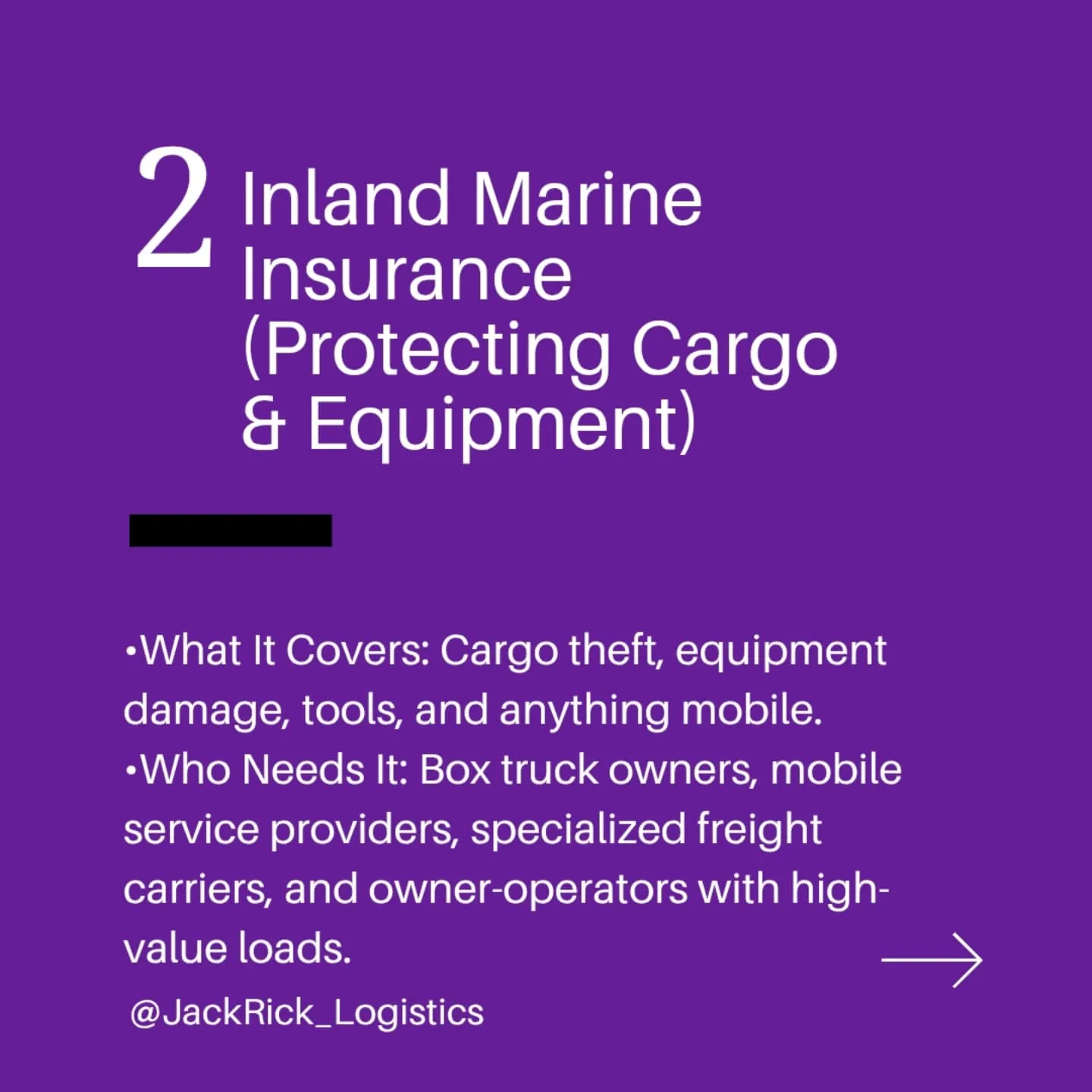
- Inland marine. Tools, tarps, chains, straps, load bars, tablets. Cheap, routinely forgotten, and the claim happens at a truck stop.
- Trailer interchange. Not optional the moment you take power-only, intermodal or a broker drop trailer.
- Cyber liability. Newer to trucking, and relevant the moment you move money through a factoring portal.
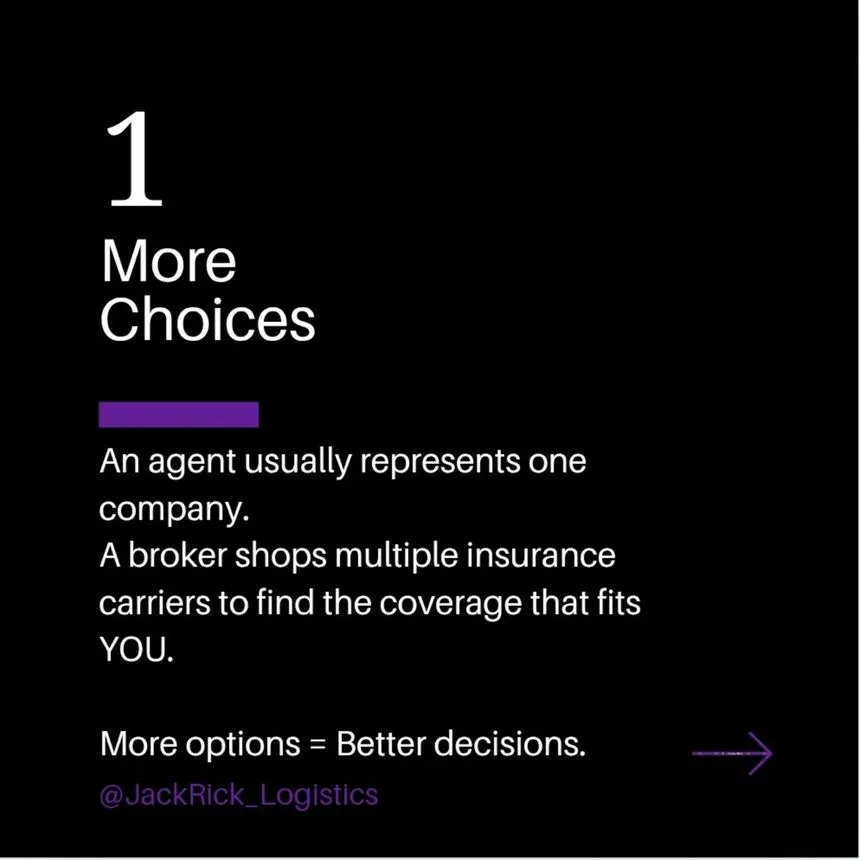
I don’t believe in telling business owners, “You need this policy,” without explaining WHY. I want you to understand the risk first. Then, we can talk about the solution.
Have it built around how you actually run
Tell me your authority status, what you haul, whose trailer you pull and your radius. Sometimes the outcome of a review is a smaller bill, not a bigger one.
Insurance is offered through Shay Denise, a licensed property and casualty producer. Coverage is subject to the terms, conditions and exclusions of the policy actually issued. Nothing on this page is a binder, a quote, or an offer of coverage.

Owner-operator insurance questions
What insurance does an owner-operator need?
It depends entirely on whether you run under your own authority or are leased on. Under your own authority: primary auto liability (filed with FMCSA), cargo, and usually physical damage. Leased on: non-trucking liability and physical damage, because the motor carrier provides primary liability while you are under dispatch. Those are two different packages at two very different prices.
Can I use the same policy if I switch from leased-on to my own authority?
No. The day your authority activates, the whole structure changes — non-trucking liability comes off, primary liability goes on, cargo becomes yours, and the premium rises by a large multiple. Plan and price that before you file, not after.
Do I need occupational accident or workers compensation?
One or the other, and which depends on your state and your status. Workers comp is required for employees in most states. Occupational accident is the product typically available to an independent owner-operator who is not covered by comp. Neither is optional in the sense that matters — if you are hurt and cannot drive, nothing else in the policy replaces your income.
What if I pull someone else's trailer?
You need trailer interchange or non-owned trailer coverage. Physical damage covers equipment you own; a trailer belonging to a carrier, a broker or an intermodal pool is a separate exposure and is usually mandatory under the interchange agreement.
Is there a standard package?
There is a common shape, and anyone selling you a fixed package without asking how you operate has skipped the work. What you haul, whose trailer you pull, your radius and whether you employ anyone all change the answer.
How do I know if I am over-insured?
That happens more than people expect — usually a coverage bought for a type of work you no longer do, or a limit set for a contract that ended. It is one of the things a policy review is actually for, and it is the part where you may leave with a smaller bill rather than a bigger one.