Semi truck dispatch service
Dispatch for Class 8 tractors running dry van, reefer, power-only and flatbed — planned around revenue per day and reload opportunity rather than the rate per mile on the confirmation.
Flat 10% per load, invoiced every Friday, 30 days' notice to leave.



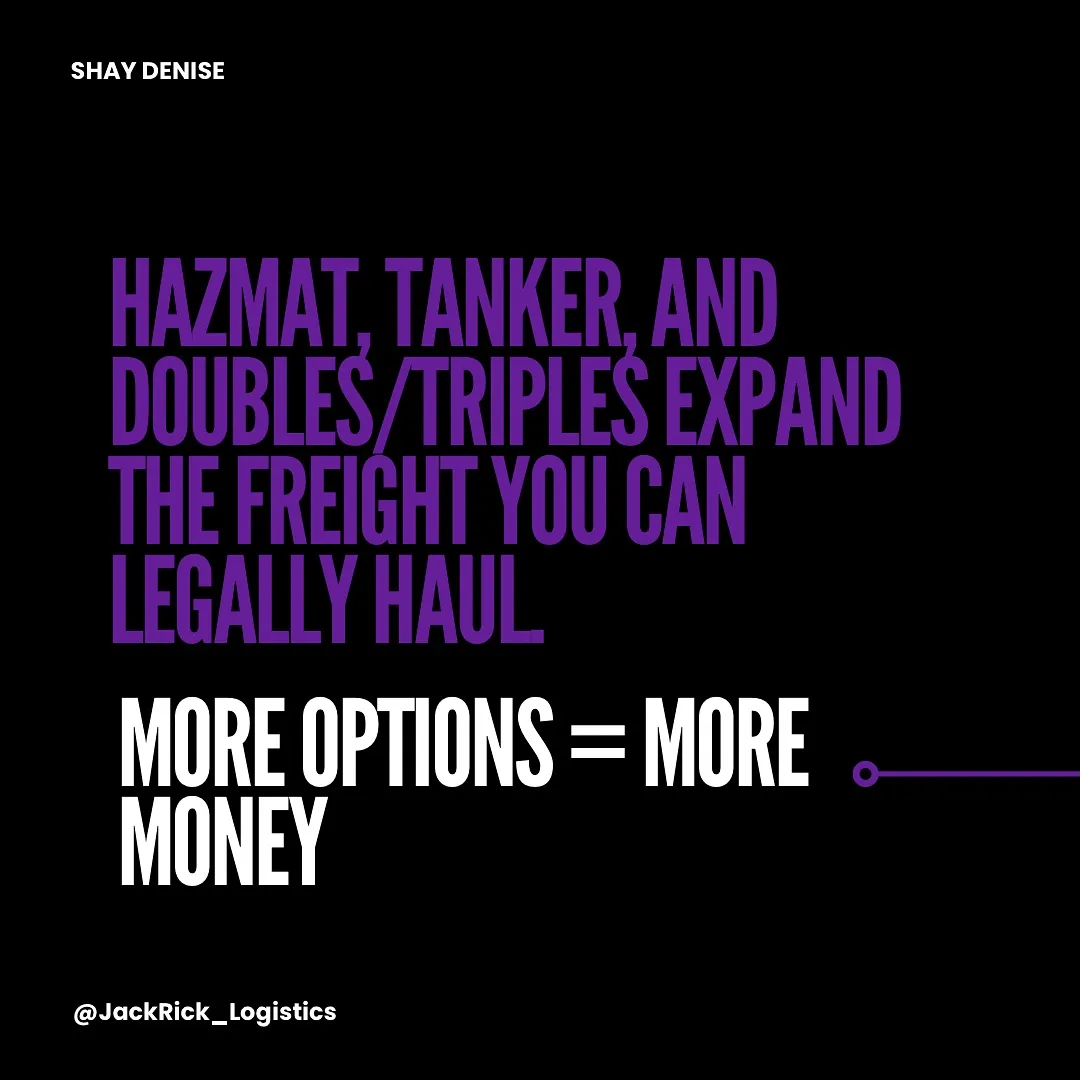

A $3.05 per mile load that loses you money
This is her own worked example, and it is the clearest illustration of why rate per mile is the wrong number to book on.
On rate per mile this is one of the best loads on the board. On revenue per day it costs you roughly two-thirds of your week. Both are true; only one pays the note.
I shoot for $1200 per day, which will often avg out to $1,000/day (give or take)
a truck can typically do about 600 miles per day
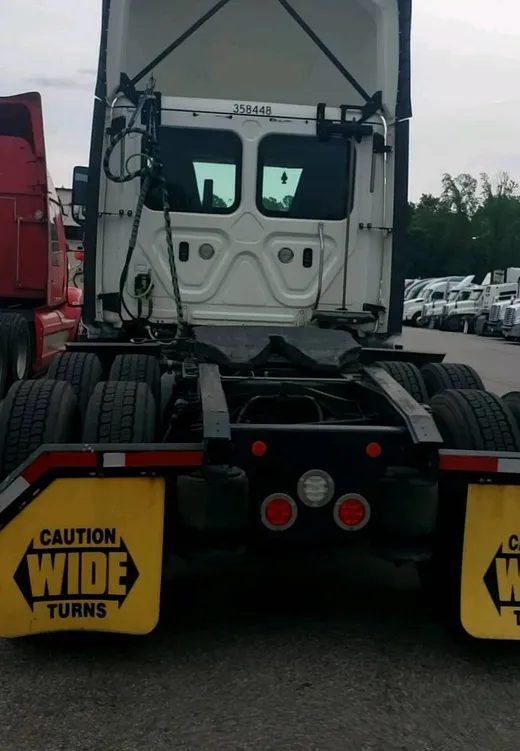


What each one actually costs you
| Type | Rate | Extra cost | Extra risk |
|---|---|---|---|
| Dry van | Baseline | None | Lowest claims exposure |
| Reefer | Higher | Unit fuel, unit maintenance, pre-cooling time | Spoilage claims; temperature download disputes |
| Flatbed | Higher | Straps, chains, tarps, and your own labor | Securement liability, weather, fall risk |
| Power-only | Variable | No trailer note or maintenance | Trailer interchange coverage required |
| Intermodal / drayage | Per-move | Chassis, per diem | Demurrage clocks that run whether the gate opens or not |
Higher rate is not higher profit until the extra cost and the extra risk are in the calculation.
Where the load ends decides what the next one pays
Booking the outbound without knowing what comes back is how a good rate becomes a bad week. Some destinations have almost no outbound freight — and that is not always a reason to avoid them.
Dead zones can be profitable, though. Before booking a load, check to see if there are any local runs in that area.
Her own example: a load into a dead zone, plus a 160-mile intrastate run inside it at $1,025, then a dispatch out to a state with real outbound volume. About $7,500 across roughly four days, into an area most dispatchers refuse on principle. The difference is that the plan existed before the truck went.
A good dispatcher doesn't just book loads, we optimize routes



The limits every plan has to survive
A dispatch plan that ignores the clock is a plan that gets your driver shut down at a receiver. These are the actual limits, with the regulation attached.
A property-carrying driver may drive a total of 11 hours within the 14-hour window, after 10 consecutive hours off duty.
A driver may not drive after a period of 14 consecutive hours from coming on duty following 10 consecutive hours off.
After 8 cumulative hours of driving without a break, a driver needs a 30-minute interruption of driving status. It can be satisfied by off-duty, sleeper-berth, or on-duty-not-driving time.
Commonly got wrong: MYTH: "the 30-minute break must be off-duty." It is a break from DRIVING, not from duty. This changed in the 2020 rule (85 FR 33452) and stale content saying otherwise is everywhere.
The sleeper-berth split needs neither period shorter than 2 consecutive hours, at least one period of 7 consecutive hours in the sleeper berth, and 10 hours in total. Qualifying rest periods do not count against the 14-hour window.
Commonly got wrong: MYTH: "the split is 8/2." Both 7/3 and 8/2 qualify. The binding rule is 7 or more in the berth, 2 or more for the other, 10 or more total.
Adverse driving conditions allow up to two additional hours beyond the maximum permitted under §395.3(a) — which extends BOTH the 11-hour driving limit and the 14-hour window.
Commonly got wrong: MYTH: "adverse conditions only extends driving time." §395.3(a) contains both limits, so both extend. Pre-2020 content says otherwise.
Tell me what the truck is doing now
Send me your last four weeks — miles, gross, and how many days each load took. That conversation is worth more than any quote.

Semi truck dispatch questions
What should a semi be grossing per day?
Shay targets $1,200 per day for over-the-road dry van, which averages out closer to $1,000 once loading, unloading, detention and hours-of-service reality are accounted for. That is her operating standard, not an industry figure — but it is a far more useful benchmark than rate per mile, because it is the number your truck actually gets paid by.
How many miles can a semi realistically run in a day?
About 600. You have an 11-hour driving limit inside a 14-hour window, and the 14 hours includes loading, fuelling, scaling and the 30-minute break. Anyone planning 700-mile days on paper has not accounted for a receiver who takes three hours.
Dry van, reefer or flatbed — which pays best?
Flatbed and reefer post higher rates and carry higher costs and higher risk. Reefer adds fuel for the unit, more maintenance and spoilage claims exposure. Flatbed adds securement, tarping labor and weather. Dry van pays least per mile and is the simplest to run. The right answer depends on your cost structure, not on which board shows the biggest number.
Should I run OTR or regional?
OTR generally posts higher revenue per week and lower revenue per hour of your life. Regional gets you home, usually pays less per mile, and often has better reload density so your deadhead is lower. Run both through cost per mile and revenue per day before deciding — the answer surprises people about half the time.
Do you take power-only?
Yes. Power-only can be excellent — no trailer note, no trailer maintenance, drop-and-hook speed. It also requires trailer interchange or non-owned trailer coverage, which a lot of carriers discover at the gate rather than before.
What does dispatch cost?
A flat 10% per load, invoiced every Friday, 30 days' notice to leave with no penalty.