Truck dispatcher vs freight broker
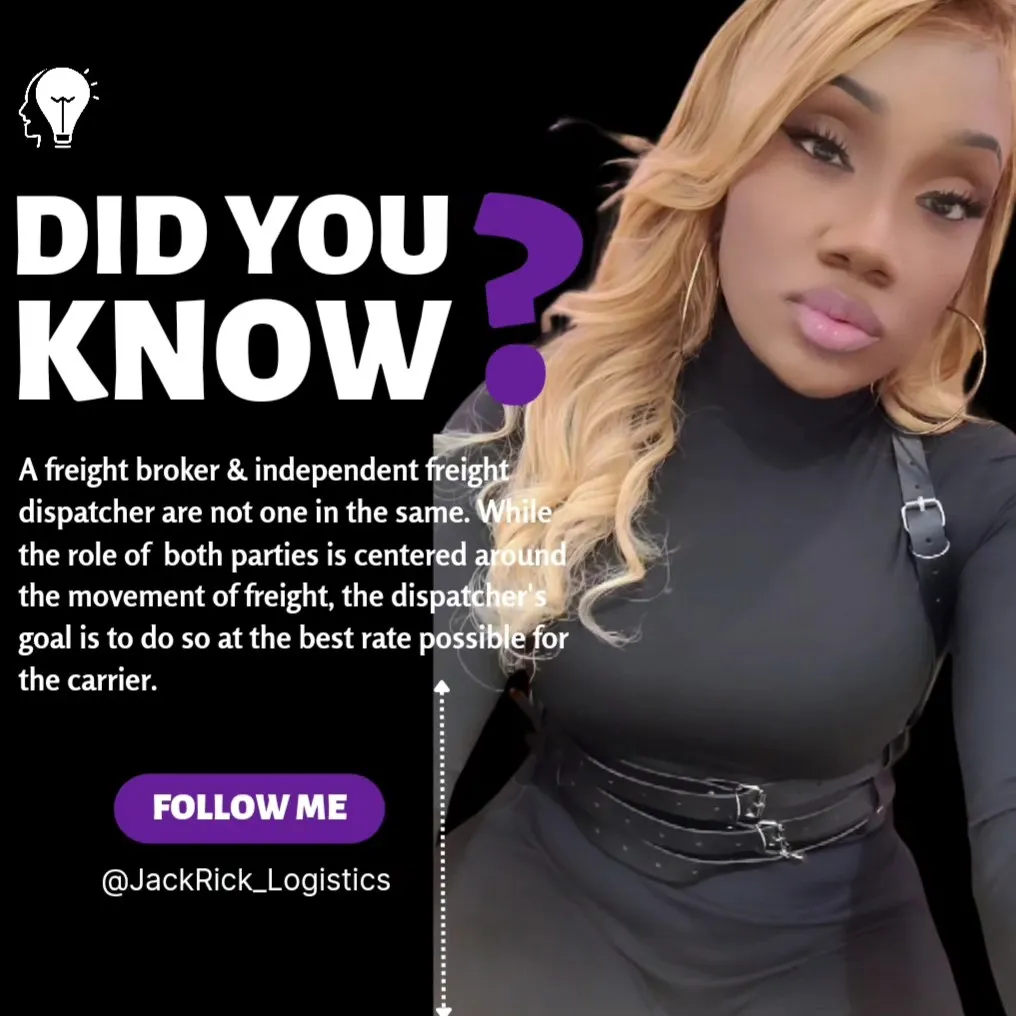
A dispatcher works for the carrier. A broker works for the shipper. They are on opposite sides of the same rate negotiation.
The legal line between them is not what a company calls itself. It is whether the business arranges transportation and allocates loads between competing carriers — and getting that wrong carries personal liability.

| Truck dispatcher | Freight broker | |
|---|---|---|
| Works for | The carrier | The shipper |
| Goal in a negotiation | The highest rate the market will pay you | Moving the freight at the lowest workable cost |
| Paid by | The carrier, per the written agreement | Margin between shipper rate and carrier rate |
| Federal authority | None required as a dispatcher | Broker authority required |
| Surety bond | None | $75,000 (BMC-84 or BMC-85) |
| Handles the money? | No — a strong indicator of broker status | Yes, by design |
| Talks to shippers? | No | Yes, that is the relationship |
It's about helping carriers make informed business decisions. The best dispatchers become your partner.
Where the line actually sits
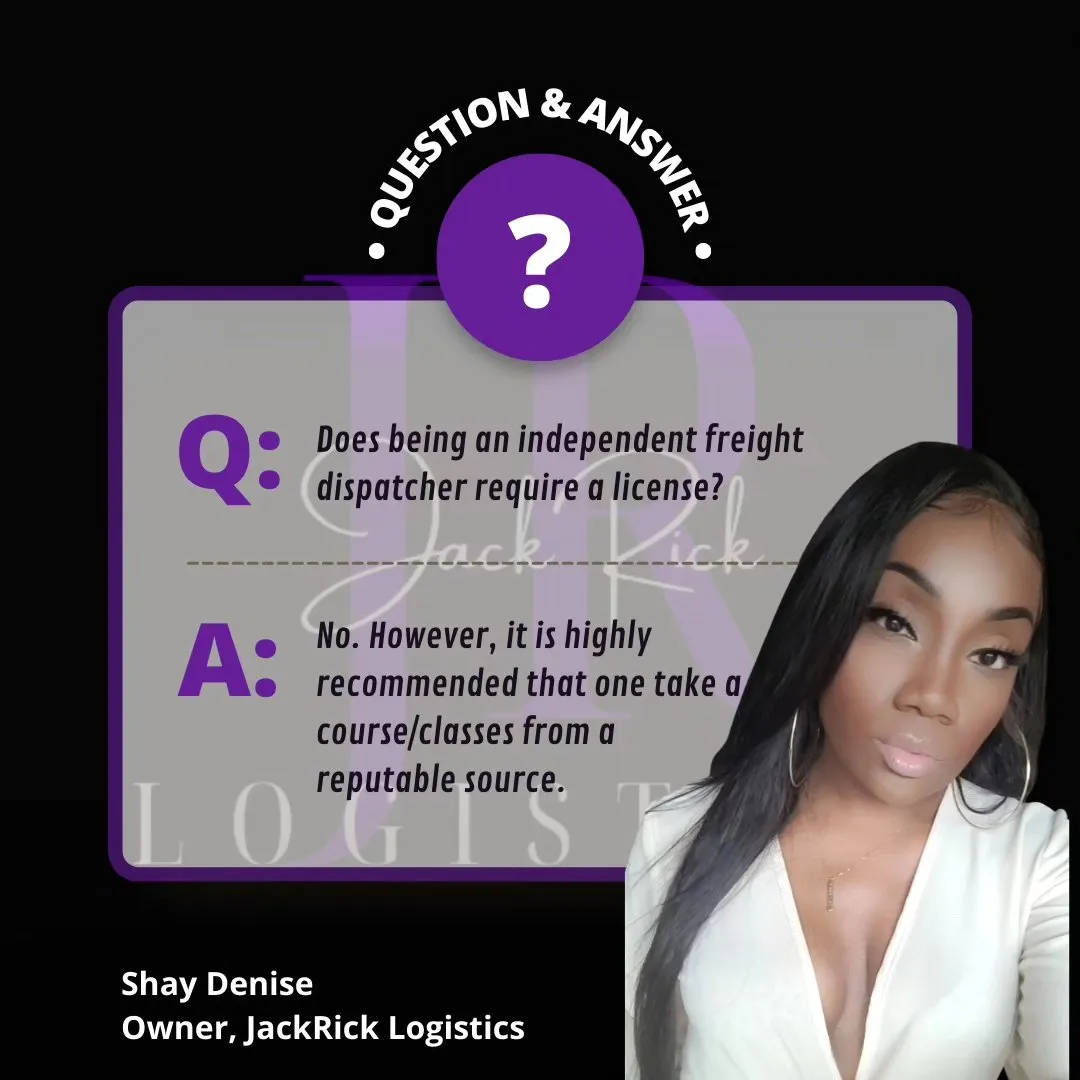
Freight dispatching is not a federally licensed occupation. FMCSA has stated in writing that it has no statutory authority to license or register dispatch services as such.
Commonly got wrong: Verbatim: "FMCSA does not have statutory authority to regulate dispatch services unless such entities also meet the criteria for registration as brokers, freight forwarders, and/or motor carriers." And: "FMCSA cannot define a new class of operating authority."
A broker is a person who, for compensation, arranges or offers to arrange the transportation of property by an authorized motor carrier. A bona fide agent of a carrier is not a broker.
Commonly got wrong: CITATION HYGIENE: cite §371.2 plainly, NOT §371.2(a) or §371.2(b). Those paragraph designations were removed on 18 Nov 2024 (89 FR 90608, 90618) when the section was reformatted into an undesignated list — the definitions themselves were unchanged. Any page still citing 371.2(a) is working from stale text.
Whether a dispatch service needs broker authority is fact-specific, not a matter of what it calls itself. A dispatcher that arranges transportation for multiple carriers and exercises discretion in assigning loads between them is allocating traffic, is not a bona fide agent, and must hold broker authority.
Commonly got wrong: FMCSA defines "allocating traffic" as "any exercise of discretion on an agent's part when assigning a load to a motor carrier." Representing multiple carriers is only safe where the agreements do not overlap — non-overlapping geography, or non-overlapping load type or equipment. Also note the mirror myth: FMCSA says handling money "is one factor that strongly suggests the need for broker authority, but it is not an essential requirement."
Brokering without registration carries a civil penalty of up to $10,000 per violation, plus liability to the injured party for all valid claims without regard to amount — joint and several, reaching individual officers, directors and principals personally.
Commonly got wrong: The uncapped private right of action in §14916(c)(2), and the personal liability in §14916(d), are the real exposure — not the $10,000.
Both halves of this matter, and they cut in opposite directions. There is no dispatcher license — anyone selling you a mandatory certification is selling you something FMCSA has said it cannot require. And "we are just a dispatcher" is not a defense if the business is handling money, contacting shippers or choosing which of its carriers gets a load.
The single clearest test FMCSA gives is allocation of traffic: representing more than one carrier is fine where the agreements genuinely do not overlap — separate geography, or separate equipment and load type. The moment the same load could go to either carrier and the dispatcher decides, that is brokerage.
This page cites the regulation and FMCSA's own published guidance so you can read the primary text yourself. Whether a specific arrangement requires broker authority is a fact-specific question, and the liability under 49 U.S.C. 14916 reaches individuals personally. If you are structuring a dispatch business, take advice.
What this means for you as a carrier
- You will work with brokers. That is where most freight lives. The question is never whether to deal with them, it is who represents you when you do.
- Ask your dispatcher how many carriers they book for. Not to catch them out — to understand who gets the good load on a Friday afternoon when two of you are empty in the same market.
- The money should come from you. If a dispatch service is being paid out of the load by the broker or the factoring company, ask why, and read the answer against the factors above.
- Get the arrangement in writing. A written agreement appointing the dispatcher as your agent is the first factor on FMCSA's own list of what keeps a dispatcher a dispatcher.
Somewhere along the way, the trucking industry started confusing load booking with logistics. They’re not the same thing.
Someone on your side of the table
Dispatch here is carrier-side, in writing, paid by you and nobody else.

Dispatcher and broker questions
What is the difference between a truck dispatcher and a freight broker?
Who they work for. A dispatcher works for the carrier and negotiates on the carrier's behalf to get the best rate. A broker arranges transportation on behalf of the shipper. They sit on opposite sides of the same rate conversation, and that is not a nuance — it determines whose interest is being represented.
Does a freight dispatcher need a license?
There is no federal dispatcher license. FMCSA has stated in writing that it lacks statutory authority to license or register dispatch services as such. But whether a particular dispatch service needs broker authority is a separate, fact-specific question — and the answer is not decided by what the business calls itself.
When does a dispatcher become a broker?
When it starts doing broker things. FMCSA points to a set of factors: dealing directly with shippers, taking or handling money in the transaction between broker and carrier, accepting a load before having a carrier for it, being a named party on the shipping contract, and — the central one — exercising discretion in allocating loads between competing carriers it represents.
Can a dispatcher work for more than one carrier?
Yes, but only within limits. FMCSA defines "allocating traffic" as any exercise of discretion in assigning a load to a carrier. Representing multiple carriers stays inside the bona fide agent definition where the agreements do not overlap — different geography, or different load type and equipment. Where the same load could go to either carrier and the dispatcher chooses, that is allocation, and it requires broker authority.
What happens if someone brokers without authority?
Civil penalties of up to $10,000 per violation, plus liability to the injured party for all valid claims without regard to amount. That liability is joint and several and reaches individual officers, directors and principals personally. The uncapped private claim is the real exposure, not the penalty.
Which one should I use?
You will use both, and that is normal. Brokers are where most of the freight is. A dispatcher is who represents you when negotiating with them. Anyone telling you to avoid brokers entirely does not understand how the market works.