How much do truck dispatchers charge?
Across the dispatch services that publish their rates, the market runs 3% to 10% of the load, or a flat fee of roughly $150 to $650 per truck per week. Most owner-operators are quoted somewhere between 5% and 8%.
The headline percentage is not what decides your bill. Whether it is taken off the gross or off the linehaul changes what you pay by more than the gap between 6% and 10% — and the published sources do not even agree with each other on which is standard.





What dispatch services actually publish
Most pages answering this question state a range and cite nothing. Below is what three named dispatch services publish on their own websites, each read on August 16, 2026. These are published claims, not audited prices — but they are at least attributable, which is more than a number pulled from the air.
| Source | Range they state | Most common | Flat fee | Percentage of what? |
|---|---|---|---|---|
| iDispatchHub | 3%–10% | 4%–7% for full-service; 8%–10% for full back office | $250–$500 per truck | Linehaul. States "the dispatch percentage applies to linehaul" and calls percentaging the fuel surcharge "quietly inflating their fee". |
| Freight Girlz | 3%–10% | 7%–8% for owner-operators and small fleets | $300–$650 per week per truck | Gross. |
| Truck Dispatch Experts | 4%–10% | 5%–8%; by equipment, 5%–7% dry van and 7%–10% hotshot/box truck | Semi $150–$400; box truck and hotshot $200–$500 | States "gross load revenue", but flags charging on "gross + fuel surcharge rather than just the line-haul rate" as a red flag. |
Surveyed August 16, 2026. Pricing pages change without notice — check each source before relying on it.
Three things fall out of that table. All three sources put the ceiling at 10%. All three offer a flat-fee alternative. And they contradict each other on the basis — one says the percentage applies to linehaul and calls charging on fuel surcharge "quietly inflating their fee"; another simply says "of gross". If the people writing the guides cannot agree, you cannot assume. Ask.
The two pricing models
Almost every dispatch service in the US uses one of two models. They are not equivalent, and which one suits you depends on how consistent your weeks are.
| Percentage | Flat fee | |
|---|---|---|
| Typical range | 5–10% | $200–$500 / truck / week |
| Cost on a slow week | Falls with your revenue | Unchanged |
| Cost on a strong week | Rises with your revenue | Unchanged |
| Incentive alignment | Dispatcher earns more when you earn more | Dispatcher earns the same either way |
| Best for | New authorities, variable weeks, one truck | High, consistent weekly revenue |
Where the real cost hides: gross versus linehaul
This single distinction changes what you pay by more than the difference between 8% and 10%, and it is the thing most services will not put in writing until you ask.
Linehaul is the base charge for moving the freight. Gross is linehaul plus fuel surcharge, detention, layover, driver assist, lumper reimbursement and every other accessorial on the rate confirmation.
The fuel surcharge and the detention are on the same page as the linehaul. Which of those three numbers your dispatcher takes a percentage of is the whole question.
A 29% difference on the same load, at the same headline percentage. Over a year at four loads a week that is about $9,360. Ask which basis applies, and get it in the agreement.
What you should be getting for the money
Booking loads is the visible part and the smallest part. A dispatch fee should also cover:
- Rate negotiation, including the accessorials most carriers forget to ask for
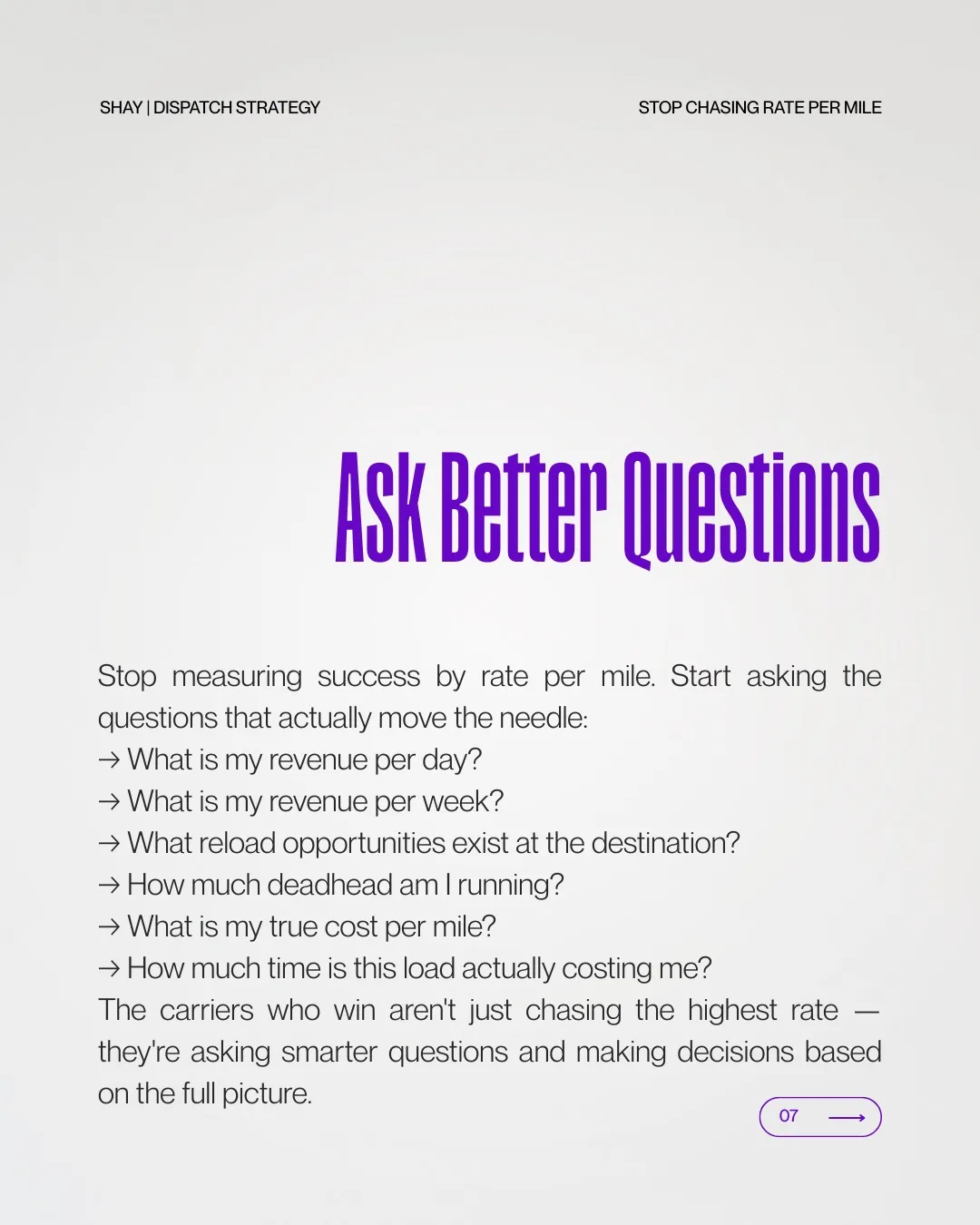
- Route planning around revenue per day, reload opportunity and deadhead
- Broker vetting and credit checks before you accept the load, not after
- Setting up carrier packets and keeping your documents current with brokers
- Tracking, check calls and problem-solving while the load is moving
- Flagging the compliance and insurance issues that get you rejected at the gate
If what you are buying is somebody forwarding you load-board links, you are paying a dispatch rate for a load-board subscription.
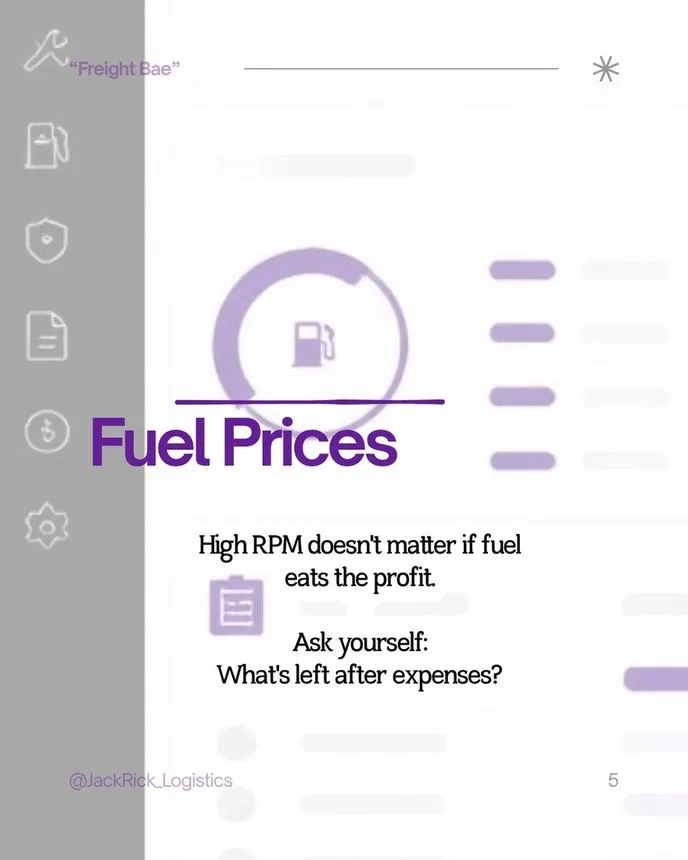
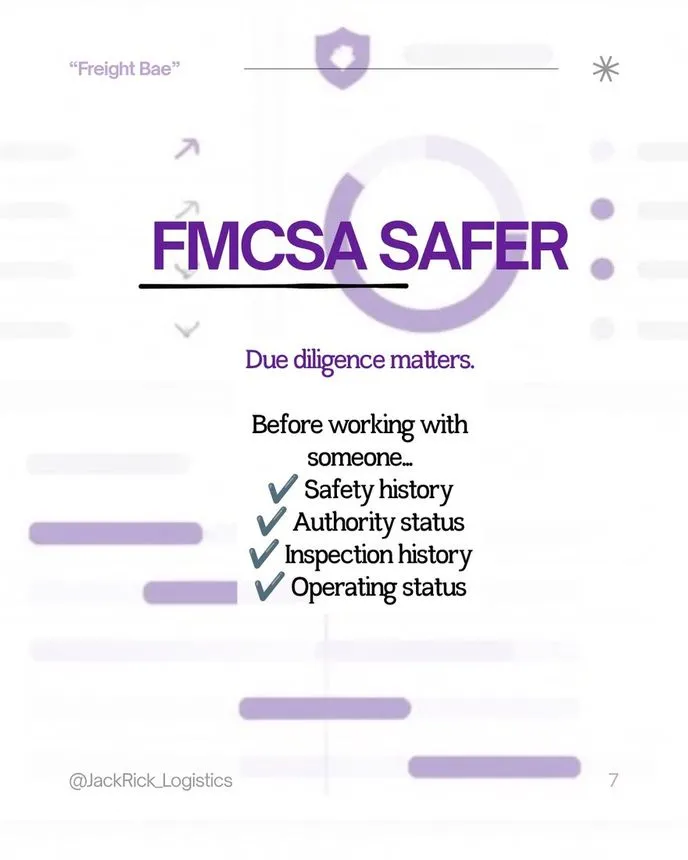
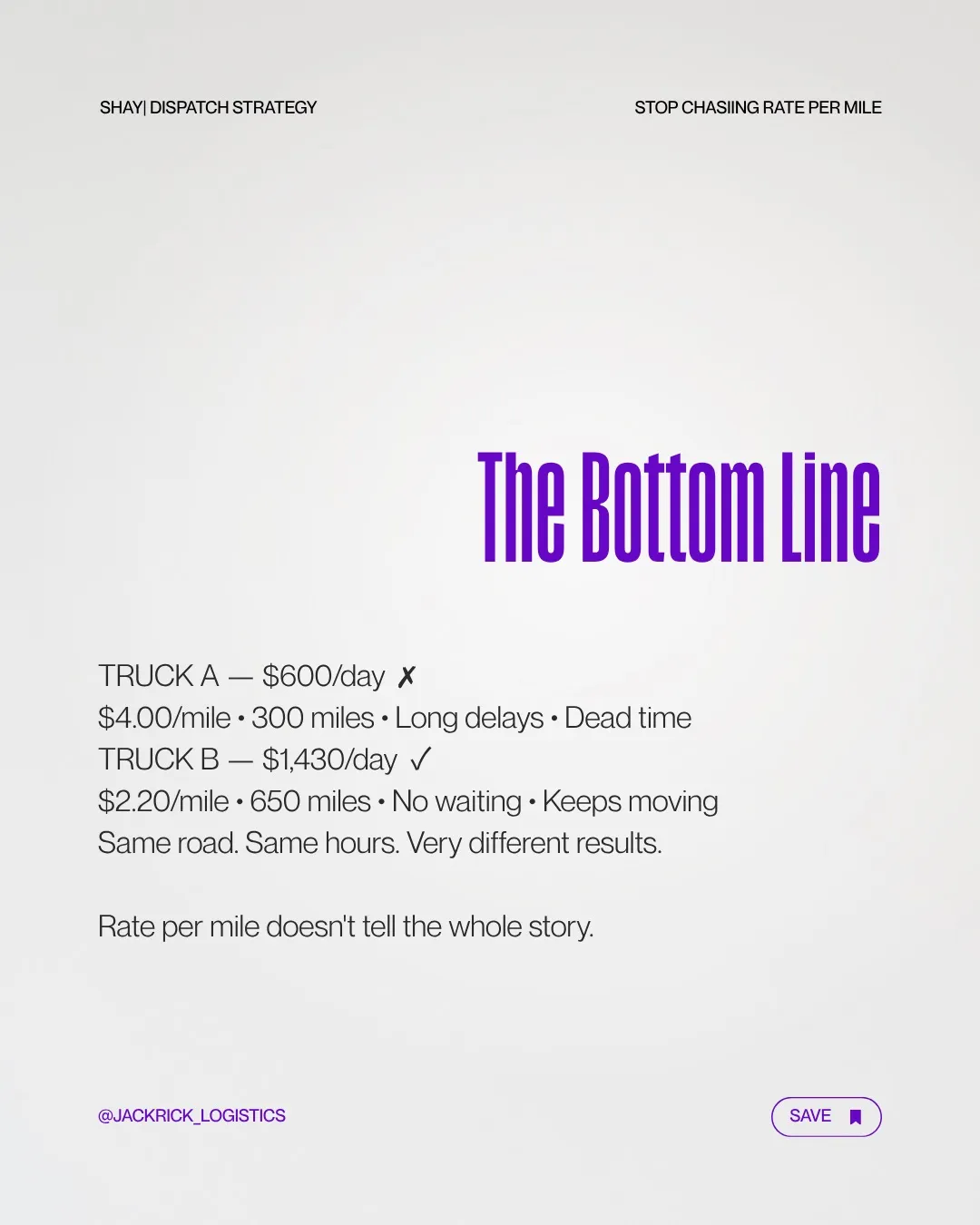
Somewhere along the way, the trucking industry started confusing load booking with logistics. They’re not the same thing.
When the honest answer is that you do not need one
If you are consistently hitting your target revenue per day, your paperwork is current, your broker relationships are established, and you actually enjoy the phone work — a dispatcher is a cost, not an investment. Some experienced owner-operators genuinely run better alone.
The carriers a dispatcher helps most are the ones who are new, the ones running two to eight trucks where the owner is still driving, and the ones who are busy but cannot explain where the money went.
Questions to ask before you sign anything
- Is the percentage on gross or on linehaul?
- Is there a setup fee, a weekly minimum, or a monthly minimum?
- How much notice do I need to give to leave, and is there a penalty?
- Do you get paid on a load that never pays out?
- Do I have to use a particular factoring company, and do you receive anything from them?
- How many other carriers are you booking for, and who gets the good load?
- Who do I call at 3am when a receiver turns my driver away?
What JackRick charges, and why it is at the top
Against the table above, 10% is the ceiling of the published market, not the middle of it. Pretending otherwise on a page about pricing honesty would be a strange way to start a working relationship, so here is the actual case.
The one source that splits the market by service level puts 8% to 10% in the full-back-office band and 4% to 7% in the find-and-book band. That is the right comparison. This is not a load-forwarding service priced like a full one.
- Compliance is included — filings, renewals and the deadlines that quietly deactivate an authority, not just loads
- Insurance is handled by the same person, as a licensed broker, so a certificate problem is caught before a broker rejects you rather than after
- No setup fee, no weekly minimum, no required factoring company
- 30 days' notice to walk, with no penalty
Where it is the wrong deal: if you gross consistently high weeks and only want loads booked, a flat weekly fee will beat 10% on arithmetic and you should take it. That is a real answer and it is sometimes the right one.




Questions carriers ask about dispatch pricing
Is a percentage or a flat fee better?
A percentage aligns the dispatcher with you — they earn more when you do. A flat fee is predictable and gets cheaper as your revenue climbs, but the dispatcher gets paid the same whether they book you a $1,200 load or a $2,400 one. If you run consistent high-revenue weeks, a flat fee usually wins on math. If your weeks vary, or you are new, a percentage keeps the incentives pointed the right way.
Is the percentage taken off gross or off linehaul?
This is the question that actually decides what you pay, and most services will not volunteer the answer. Gross includes fuel surcharge, detention, layover and every other accessorial. Linehaul is the base freight charge only. Take a load that grosses $2,000 — $1,550 linehaul, $300 fuel surcharge, $150 detention. At the same headline 10%, the fee is $155 on linehaul and $200 on gross. That is a 29% difference on identical work. Ask which one, in writing, before you sign.
What does JackRick charge?
A flat 10% per load, the same for box trucks and semis, invoiced every Friday, with 30 days' written notice to leave and no long-term contract.
Are there setup fees or minimums?
Some services charge an onboarding or setup fee, and some set a weekly minimum you pay whether or not you run. Both are legitimate, but both change the real cost significantly for a one-truck operation. Ask about them specifically — a quoted percentage with an undisclosed weekly minimum is not the price you think it is.
Does the dispatcher get paid if the load does not?
Ask. If a broker goes under or a claim eats the invoice, a fair arrangement is that the dispatcher does not earn on money you never collected. Get the answer before it happens rather than after.
Do I have to use their factoring company?
You should not have to. If a dispatch service requires you to factor through a specific company, find out whether they receive anything from that company. There may be a perfectly good reason for the arrangement, but you are entitled to know it exists.